food + drink · mains · posts

Miso Marinated Salmon with Green Salad

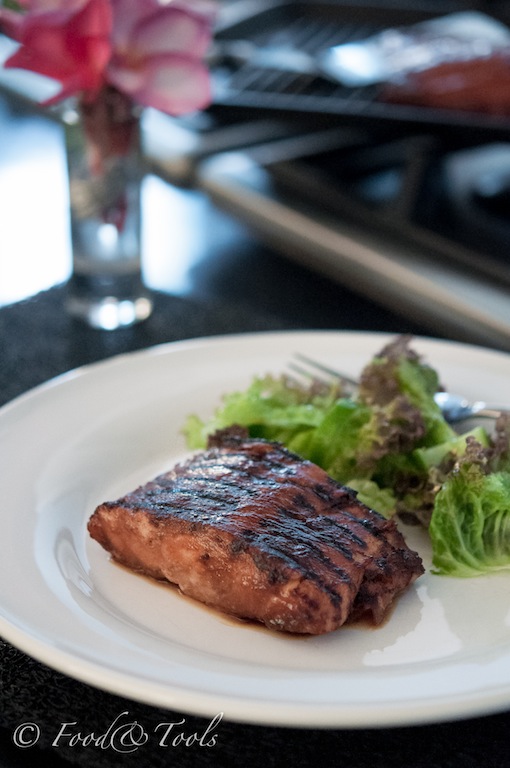
Miso Salmon-0487Browsing through The Perfect 10 Cookbook’s (a supplement of Woman This Month magazine) recipes from around the world, “Japanese” and “Miso” caught my attention and immediately I found myself craving that pleasant savoury flavour, called Umami… our 5th sense of taste. Japanese is such a feel good food, even hearing and saying the words tempura, sukiyaki, miso, sashimi, sushi… makes me hungry!

Buying Miso can be a little confusing as the paste varies in colour, texture, flavour, sweetness and saltiness! Miso is a naturally fermented paste and is a basic flavouring used in Japanese cooking; produced by cooking soybean, rice or barley, injecting with a mold, mixing with water and salt, miso is then aged in kegs… some up to three years! When I think about miso as a condiment it opens up many culinary possibilities when adding miso to sauces, soups, broths, dips, marinades and dressings, all of which can be used with vegetables, meat, chicken, duck and fish.
Miso Salmon-0507From as far back as I can remember I have always loved the taste of Salmon. This oily fish is so versatile and works with many flavours. I used a dark soybean miso (Hatcho) with the Salmon, but it is quite acceptable to use a lighter sweeter miso. As miso pastes vary, tasting miso straight from its packet is a good way of gauging its flavour and saltiness before using with recipes. Use a smooth miso paste for marinating. Miso confused… then hop over to The Just Hungry blog which has some great information on miso.
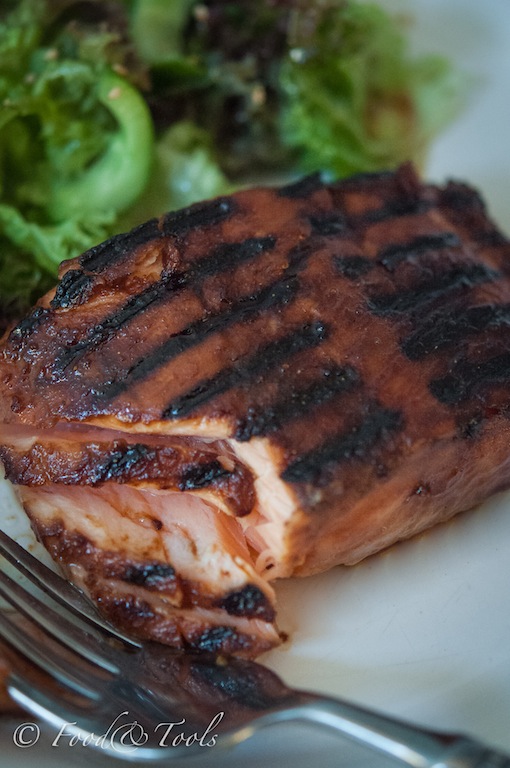
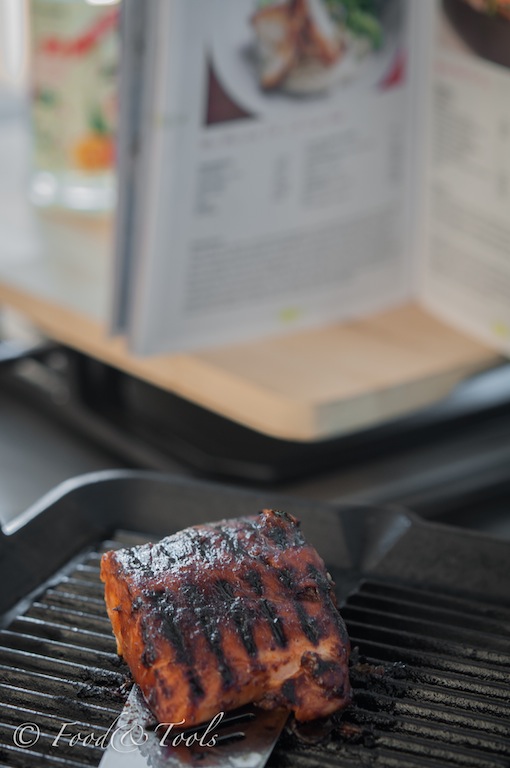
Miso Salmon-0492Once the fish has marinated for 24 hours, the rest is quick and easy. For a more substantial meal, serve this dish with steamed Japanese rice or udon noodles. With the healthy omega and the satisfying umami, this dish is sure to please.

Miso Marinated Fish with Green Salad

This recipe is adapted from the Perfect Ten Cookbook, a supplement of Woman this Month magazine, recipe by James Claire.

Ingredients:

  • 2 tablespoons of Japanese cooking sake
  • 100ml mirin
  • 100g of hatcho miso paste (or your own preference)
  • 2 teaspoons honey
  • 4 salmon fillets (or other firm white fish) (each weighing 150g to 175g)

for the salad and dressing

  • 1 head of lolla rossa lettuce, torn into bits sized pieces
  • 3  medium cucumber, seeds scraped out, thinly sliced
  • 3 spring onions, thinly sliced
  • 2 tablespoons white wine vinegar
  • 2 tablespoons mirin
  • 1 tablespoons sesame oil
  • sea salt, to taste
  • toasted sesame seeds, for garnish

How to make: For the marinade, pour the sake and mirin into a small saucepan, bring to a boil, reduce heat and simmer for about 30 seconds. Remove for the heat and gradually whisk in the miso paste until you have a smooth mixture. Mix in the honey. Leave the marinade to cool. Slather the miso marinade all over the fish fillets. Cover the fish and leave to marinate in the fridge for 24 hours.

Heat a ridged grill pan to medium-high heat. Brush the ridges of the grill pan with vegetable oil before placing the fish on to cook, otherwise the fish will stick. Place the fish top side down and leave the fish undisturbed for about 3 minutes or until you make the grill marks. Turn the fish over, reduce the heat to medium and cook for a further 5 minutes or until you have cooked to the desired doneness.

In a small dish whisk the white wine vinegar, mirin and sesame oil together, season with salt.  Toss the dressing with the salad and scatter over the sesame seeds just before serving. Serves 4.

Note: The fish is best marinated for 24 hours but you could marinate the fish overnight if you were short on time. You can use a normal fry-pan instead of the ridged grill pan or cook the fish under a grill if preferred.
food + drink · mains

Vietnamese Style Noodle and Prawn Soup

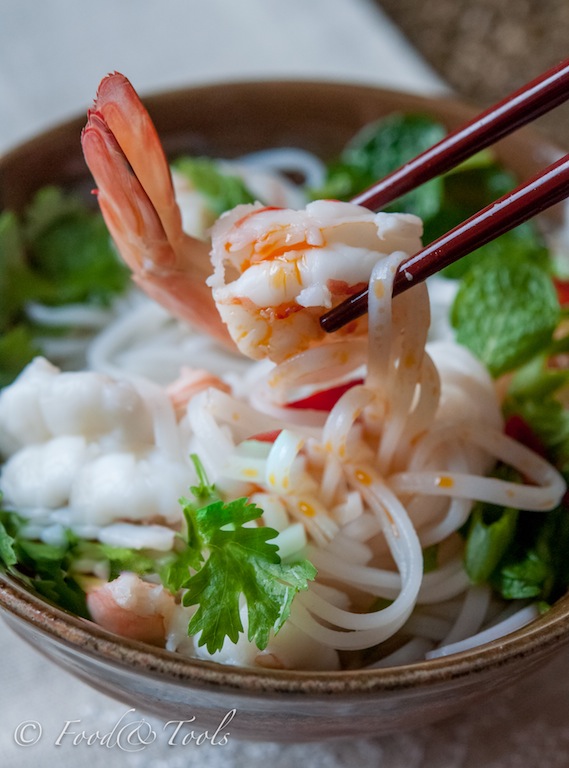
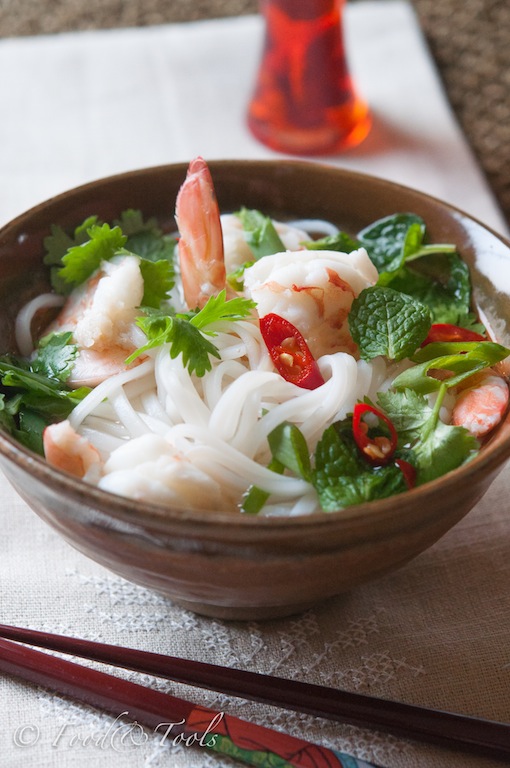
Vietnamese Noodle Prawn SoupI think it is safe to say that most of us enjoy a warm comforting bowl of soup and with the addition of noodles making it a complete meal… it’s guaranteed to be a winner! Vietnamese food is considered one of the healthiest cuisines, lots of clean flavours with recipes using spices, lots of fresh herbs and vegetables! Carefully balanced broths, stocks and sauces are of great importance, transforming the taste of the simplest dish! Just like the Vietnamese Salad,  Vietnamese Style Noodle and Prawn Soup is quick and easy to prepare for family meals and could also be served as part of an Asian style menu when entertaining!
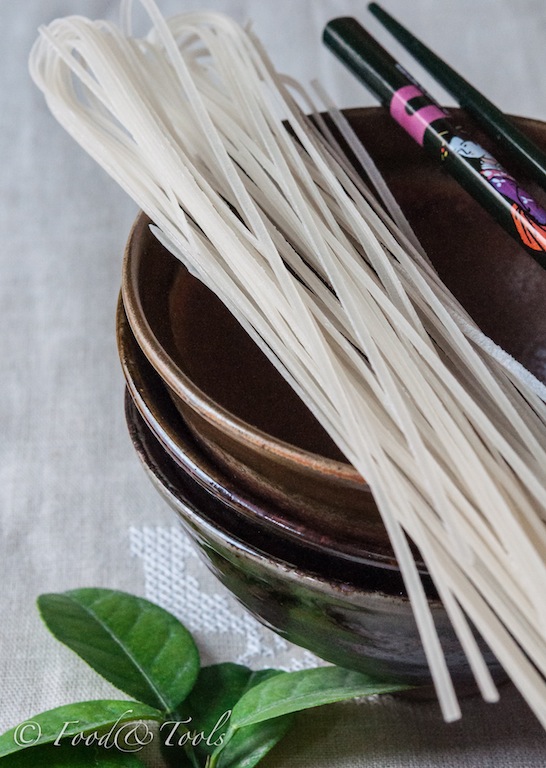
Rice stick noodles are perfect to use in soups made with a light aromatic stock and people who suffer from gluten and wheat intolerance’s get to enjoy them as well! Rice noodles are best soaked in boiling water and not boiled in a saucepan which can easily turn them to mush! Either way, make sure your noodles are al dente, just like pasta!Dried Rice Noodles, Lime Leaves

The stock has been infused with lime leaves (not Kaffir lime leaf) taken from our lime tree growing in the garden! Unfortunately no limes yet… apparently the tree is still young… at least the lemon tree is starting to bud once again! 🙂  These small lime leaves are very fragrant when torn and it’s such a waste not to put their intoxicating perfume to some culinary use!  As the tree has not been sprayed with any chemical pesticides I am quite happy to use the lime leaves in my cooking!

Using the shell of the prawns when making the stock adds a delicate flavour and the stock only needs a gentle simmer for 20 minutes, with no salt added! Fish sauce and lime juice are the seasonings for this stock so use this recipe as a guide, balancing both according to your taste buds!Vietnamese Prawn Noodle Soup

I thought this was a nice idea and another way to serve Vietnamese soups (Pho), seen over at JungleFrog Cooking blog… putting the garnishes into individual bowls on the table, each person can choose and add what they like to their own bowl of soup! To add more flavour and spice things up a little, leave a bottle of chilli oil on the table to drizzle over the soup!  Use chop sticks to pick up the noodles and prawns when eating and afterwards pick the bowl up with your hands and slurp the delicious and light flavoursome soup from the bowl! Now if that sounds like bad table manners… head for the cutlery drawer!

Vietnamese Style Noodle and Prawn Soup

Ingredients:

  • 400g uncooked medium-sized prawns, heads removed and discarded, prawns peeled and deveined, reserve the shells
  • 200g dried (2mm wide) rice stick noodles

for stock

  • 1.5 liters of  water
  • 1 large garlic clove, peeled and thinly sliced
  • 1 inch piece of fresh ginger, sliced thinly
  • 1 lemongrass stalk, discard tough outer leaves, chop finely
  • 1 tablespoon of freshly chopped coriander root
  • 10 whole black pepper corns
  • 6 lime leaves (optional)

for seasoning

  • 2 limes juiced (approximately)
  • 3 tablespoons of fish sauce (approximately)

for garnish

  • a handful of fresh coriander leaves
  • a handful of fresh mint leaves
  • 2 spring onions, green part, slice thinly, diagonally
  • 2 to 3 small chilli, slice thinly, diagonally
  • chilli oil to drizzle (optional)

How to make: Rinse the prawn shells and add together with the water, garlic, ginger, lemongrass, coriander root, black pepper corns and torn lime leaves into a saucepan, bring to a boil. Reduce the heat and simmer the stock uncovered for 20 minutes! Strain the stock and return to a cleaned saucepan!

Meanwhile place the rice noodles into a large heat-proof bowl or dish and pour over boiling water to cover completely. After about a minute move the rice noodles around so they do not stick together, check again after another minute! Leave noodles to soak for about 8 to 10 minutes, checking that they are not turning mushy and still have a slight bite to them! Once cooked drain and refresh with cold water. Set aside until needed.

Add the prawns to the stock and simmer for a minute or until prawns have changed colour! Add the lime juice and fish sauce gradually, check seasoning, adding more if required.

Divide the noodles into the bowls, ladle over the stock and divide the prawns. Garnish each bowl with some coriander, mint, spring onion and chilli. Serve immediately. Serves 4

food + drink · mains · posts

lamb and vegetable stew with arabic flatbread – thareed

Stewing is an age-old method of cooking and history suggests that these types of dishes have been around since the advent of clay pottery. From gumbo to Irish stew many cultures from around the globe have some type of stew recorded in their culinary repertoire. Coming from an Irish upbringing stews play close to my taste buds heart as Irish Stew (also lamb and vegetables) is a national favourite!

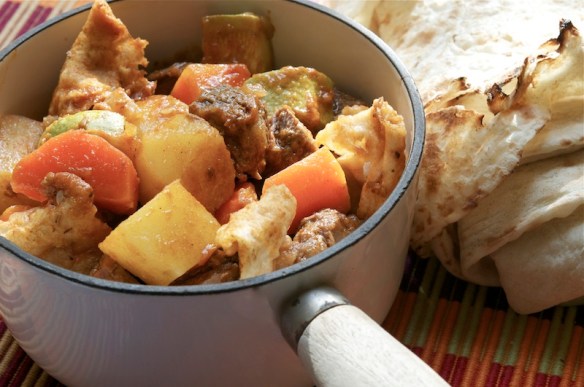
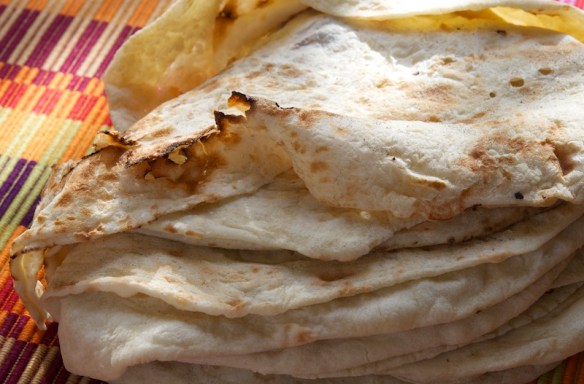
Thareed is a stew consisting of lamb and vegetables that have been slowly simmered in a spiced tomato based broth. Once cooked, torn pieces of thin flatbread (khoubz) are added, soaking into the flavorsome broth, making the dish a complete meal in itself! Thareed is a popular dish eaten during Ramadan and served for Iftar, the first meal eaten after fasting.

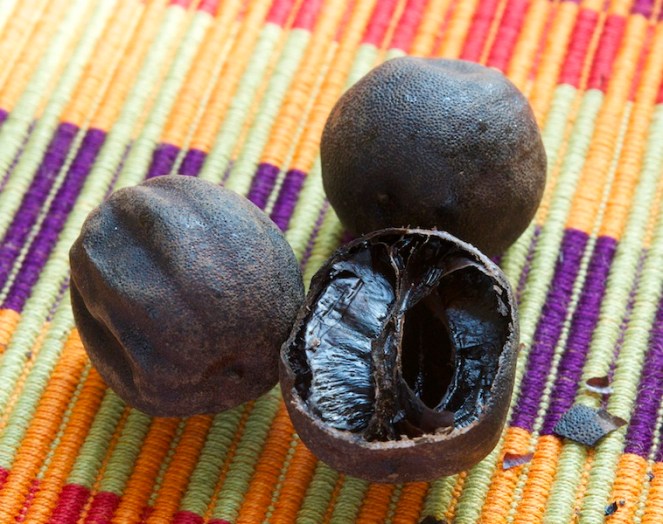
Dried black lime (loomi aswad) added to the simmering broth of thareed imparts a delicious sweet-tangy flavour which is quite unique! Piercing with a knife beforehand allows the broth to permeate the dried lime, releasing its wonderful flavour, that I believe cannot be substituted in the same way using fresh lime or lemon zest!

These small limes are boiled for a short time in salted water and left to dry out in the sun or in a dehydrator, turning them tan or black in colour depending on the length of time spent drying. Throughout the middle east dried limes are used as a souring agent in cooking and are also ground and used in spice mixes and marinades! Sometimes these dried limes are called whole black lemons or lemon powder… somehow the name may have got lost in the translation… but dried limes they are!

Long and slowly simmered stews deserve the best cooking pots  and my preference is a heavy gauge pot with a tight-fitting lid (also called a Dutch oven), which can be used either on the stove top or in an oven. The food can also be served straight from the pot itself, making washing-up a breeze!

Slow simmering stews with wafting aromas are usually associated with cold blustery winter days, however living in Bahrain with a 45 celsius summer heat  leaves me with the only suggestion… turn your air-conditioning to full blast and tuck in!

Thareed

Ingredients:

  • 1kg lamb shoulder chops
  • 2 tablespoons vegetable oil
  • 2 large onions, peeled and chopped
  • 2 garlic cloves, peeled and crushed
  • 1inch piece fresh ginger, peeled and finely chopped
  • 2 teaspoons Baharat (Arabic spices, see note below)  or your favourite mixed spices
  • 1 teaspoon whole coriander seeds, lightly crushed
  • 4 large tomatoes, roughly chopped
  • 4  heaped tablespoons of tomato purée
  • 4 tablespoons chopped fresh coriander
  • 4 cups of water
  • 2 small whole dried limes, pierced with a knife
  • 2 inch piece of cassia bark or cinnamon stick
  • 3 whole green chilli
  • 2 teaspoons salt
  • 3 large waxy potatoes, peeled and cut into chunks
  • 2 large carrots, peeled and cut into chunks
  • 4 baby courgettes, cut into chunks
  • 1 or 2 piece (approximately) of thin flatbread (khoubz)

 How to make: With a sharp knife, remove the meat from the bone, trim excess fat and cut into cubes, do not discard the bones as they will be used for flavour.

In a flame-proof casserole dish or heavy based saucepan placed over high heat, heat the oil until hot. Add the lamb and bones in batches and brown on all sides, transfer each batch to a plate when browned. Set aside.

Reduce the heat to medium, add the onion, cook until soft and golden. While cooking the onion you may notice the bottom of the pan getting brown, adding a little water will help loosen the brown bits from the bottom while stirring with a wooden spoon. Add the garlic and ginger, cook for about 30 seconds stirring continuously, next add in the mixed spices and coriander seeds, cook for a further 30 seconds. Add in the tomatoes, tomato purée, fresh coriander, lamb and bones, stir all together.

Pour in the water, add the dried lime, cassia bark or cinnamon stick,  green chilli and salt.  Cover with a tight-fitting lid and simmer very gently for 1 hour.

Add the potatoes and carrots into the stew cover and continue to gently simmer for another 40 minutes. Add the courgettes, cover and simmer for another 15 minutes or until tender.

Once the stew is finished cooking and meat and vegetables are tender, taste  and add more salt if necessary. Tear the bread into 3 or 4 inch pieces and gently mix into the dish, the bread will soak into the broth, no dry bits of bread should be visible. Serve straight from the cooking pot or place into a large serving bowl. Serves 4 to 5 people.

Baharat is the Arabic word for spice mix which may consist of a mix of ground black pepper, cinnamon sticks or cassia bark, cumin, coriander, cloves, cardamom, chilies, turmeric and nutmeg in various quantities. The souks in Bahrain have a wonderful variety of whole and ground spices.

What is your favourite stew?