food + drink · posts · store cupboard

Preserved Lemons

I always like to keep a constant supply of what I call my must-have store cupboard essentials, like home-made vanilla products, dried tomatoes, preserves etc.  Even though I refer to them as store cupboard items, some need refrigeration, as living in the middle east does not allow for a cool enough pantry or store cupboard.

Used in Moroccan and North African cooking, preserved lemons are an indispensable and wonderful item to have… at a moments notice food can take on a new dimension both in flavour and taste by adding small amounts of preserved lemons to salad dressings, salads, stews, relishes, pizza toppings, stuffings, marinades and so much more.
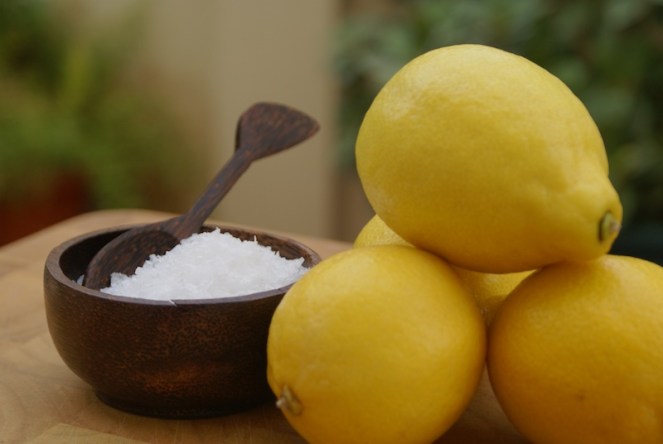
When I started preserving lemons I remember following a recipe that used so much salt that I found them inedible and quite horrible, throwing the whole lot in the bin and not thinking much of preserved lemons.
Before satellite TV came to Bahrain my parents would record cookery programs for me and send them by post. Dad was usually in charge of editing but I could always tell when he had nodded off on the job, leaving me to watch cookery programs along with long TV commercials and bits of other programs. And it was in one of those recorded cookery programs I gave preserved lemons another chance… and if you have never tried making them before, it is so worth the effort!
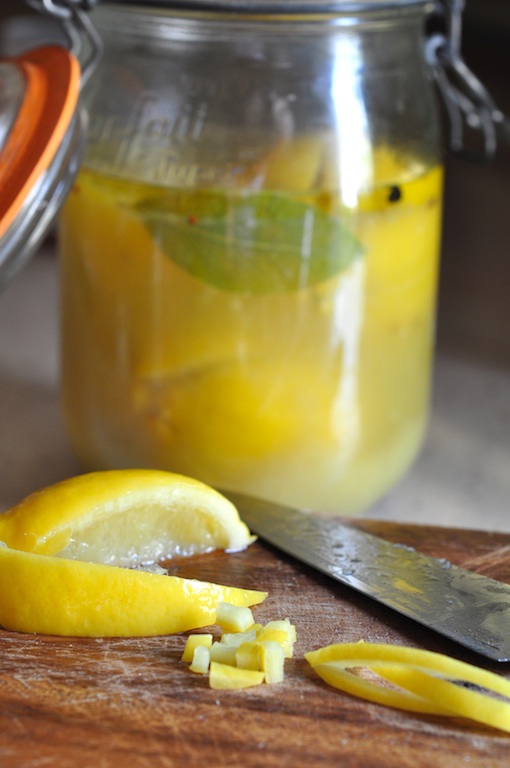
A little goes a long way with preserved lemons, which are salty, tart and intensely flavoursome and when it comes to slicing and dicing the preserved lemons, a good sharp knife is a must, obtaining the finest results.

With a lemon tree (two years) growing in the garden I would so like to tell you that I am using my own organic lemons, but will have to wait until next year… all my lovely little lemons this year turned black and fell off 😦  I am still not giving up… so fingers crossed for next year.
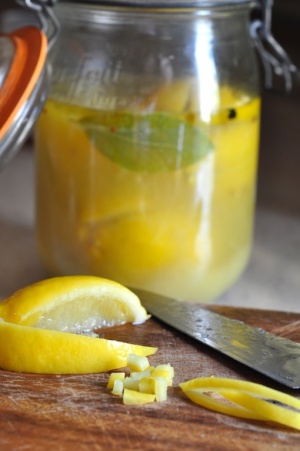
Preserved Lemons - Diced and Sliced

 Preserved Lemons

Ingredients:

  • 5 lemons, (see note below if not using organic or un-waxed lemons)
  • 5 rounded tablespoons of sea salt
  • 1/8 teaspoon mustard seeds
  • 1/4 teaspoon whole black peppercorns
  • 5 cloves
  • 1 small cinnamon stick
  • 2 fresh or dried bay leaf
  • extra juice of 3 or 4 lemon (zest beforehand and use in another recipe or dry the peel)
  • olive oil

You will need a suitable preserving jar with a tight fitting lid.

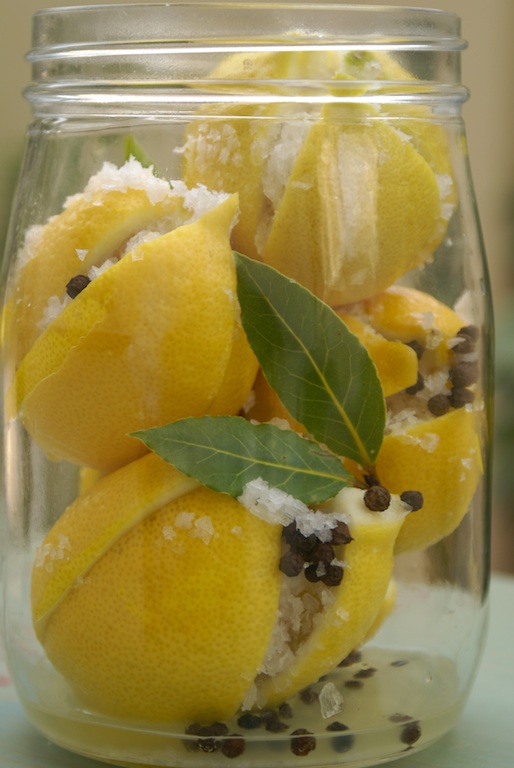
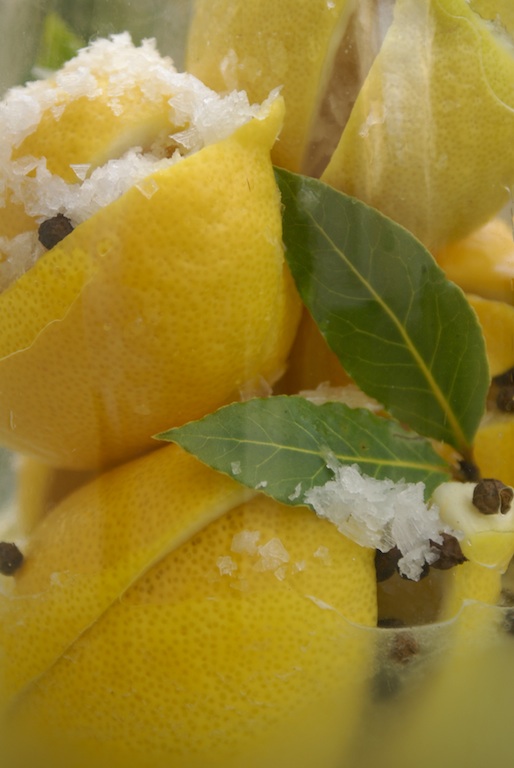
How to make: Using a sharp knife cut the lemons lengthways into 4 quarters, stopping just about 1/2cm before the stem, keeping the lemon quarters intact. Open the lemons up a little and place a rounded tablespoon of salt into the middle of each lemon. Tightly pack all the lemons into a clean sterilized jar, adding the mustard seeds, black peppercorns, cloves, cinnamon stick and bay leaf. Cover the jar with a lid and set aside for several hours, by this time the lemons will start to release a little of their juices.

Open up the jar and using the back of a small ladle, push the lemons down into the jar, helping to release more juice. Pour in the extra lemon juice to fully cover the lemons. Pour a thin layer of olive oil over the surface of the lemon juice and cover with a lid.

Store in the refrigerator for one month before using! When using the preserved lemons remove the pulp and dice or slice the required amount. The pulp can be liquidized and used sparingly in marinades, stews or discarded if wished. Use lemons within six months.

Tip: To help remove and melt the wax from lemons; place lemons into a heatproof bowl and pour over some very hot (not boiling) water. Leave the lemons to sit for a minute or two. Remove the lemons using a slotted spoon or tongs and immediately dry the warm lemons by rubbing them with some kitchen paper or a clean lint free tea towel.

Try using different whole spices like, fennel seeds, cumin, coriander seeds, cardamon pods allspice and star anise, you could also add whole dried chilli.

Have you made or used preserved lemons before? What is your favourite way of using them?
desserts · food + drink · posts · store cupboard

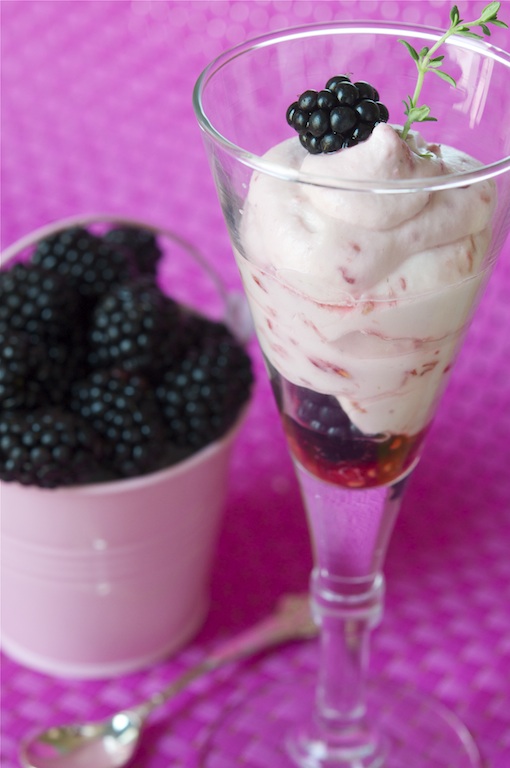
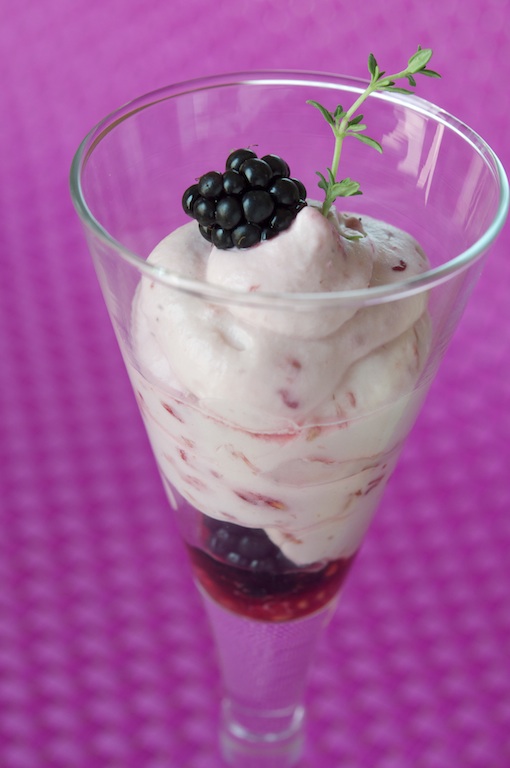
easy mixed berry mousse made with uncooked raspberry jam

Fruit and dairy products make a delicious combination and chilled desserts using these ingredients can easily be assembled for quick summer entertaining. This months blog hop theme “Berry Nice to Meet You” found me scouring the supermarkets to find the freshest raspberries (organic if possible) available, as I wanted to make an uncooked raspberry jam. I love traditional jam making and had recently made some delicious Doughnut Peach Conserve, but it’s always nice to try a different method!

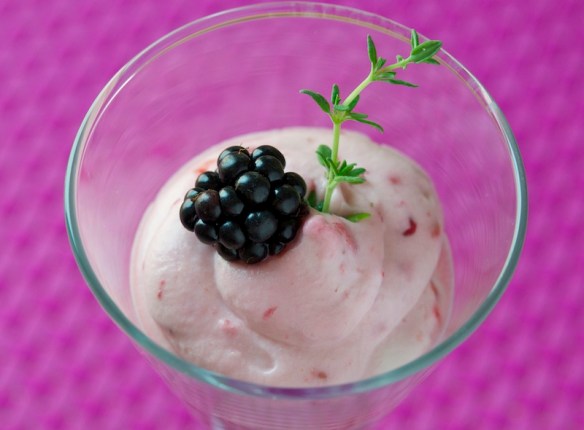
Planing an easy make-ahead dessert for entertaining, the uncooked raspberry jam was perfect for this easy berry mousse, assembled and served in glasses. Actually this berry mousse would make a wonderful filling for pavlovas, meringues and cakes.

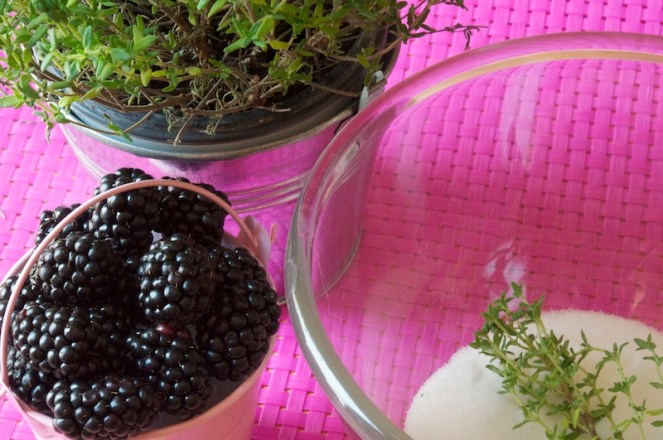
When making the jam, warming the sugar makes it easier to dissolve and the heat helps release some of the pectin when mixed with the berries! Infusing the warming sugar with the wonderful perfume of thyme had more of a therapeutic effect on me than the taste it delivered. However the fresh thyme served with the finished mousse was really quite delicious…!

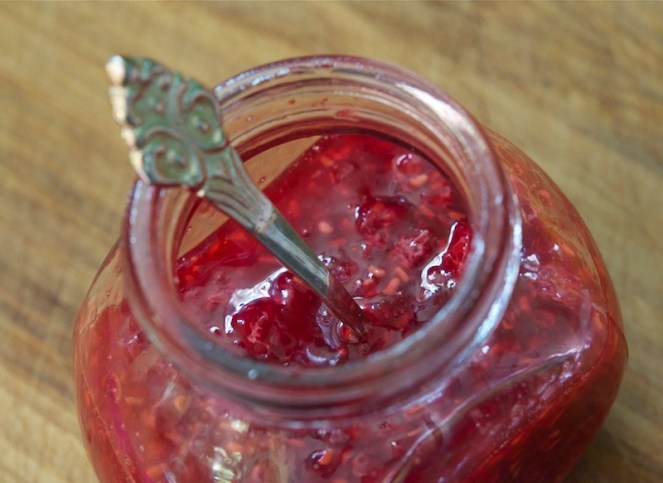
Using only sugar and raspberries in equal weights, Marguerite Pattens version of uncooked raspberry jam; heat the sugar for 15 minutes in an oven on a low temperature  before mixing with the berries until the sugar has dissolved, then place the jam into hot jars and store in the fridge. I would imagine using perfectly ripe berries would make a nicely set jam but I needed to give my jam a little helping hand by adding a small amount of gelatine.

Over at Serious Eats you can find different recipes for delicious uncooked jams or freezer jams (method of preserving), which use instant pectin for sure jam setting results. Less sugar and more fruit is my preference when making jams and conserves, I still find them very sweet… but also berry very delicious!

Room temperature does make this jam somewhat runny, so when serving this jam with freshly baked scones, I would leave a little pot resting on some crushed ice, keeping its spoonable consistency.

Uncooked Raspberry Jam

Ingredients:

  • 100g castor sugar
  • 5 sprigs of fresh thyme (optional)
  • 170g fresh raspberries or blackberries or you could even use a mix
  • 1 tablespoon lemon juice
  • 1/2 teaspoon powdered gelatine

How to make: Place the sprigs of thyme into a heatproof bowl and cover with the castor sugar. Place the bowl into the oven and turn the temperature to low (160°C), leaving the sugar to heat and infuse with the flavour of thyme for about 30 minutes, give a quick stir half way through heating.

While the sugar is warming place the raspberries into a bowl. Remove the hot sugar from the oven, discarding the thyme. Quickly sieve (catching any small bits of herb) over the raspberries. Gently mix together and set aside while preparing the gelatine.

Pour the lemon juice into a small heatproof dish and sprinkle over the gelatine, leave to sponge for a couple of minutes. Bring a small amount of water to a boil in a small saucepan, remove from heat and place the bowl containing the gelatine into the hot water. Stir the gelatine until completely dissolved.

Gently mix the raspberries and sugar a few more times, ensuring the sugar has melted. Stir the gelatine into the raspberry jam. Spoon the raspberry jam into a suitable jar rinsed with some boiling water, cover and leave the jam in the fridge to set, a few hours or overnight.

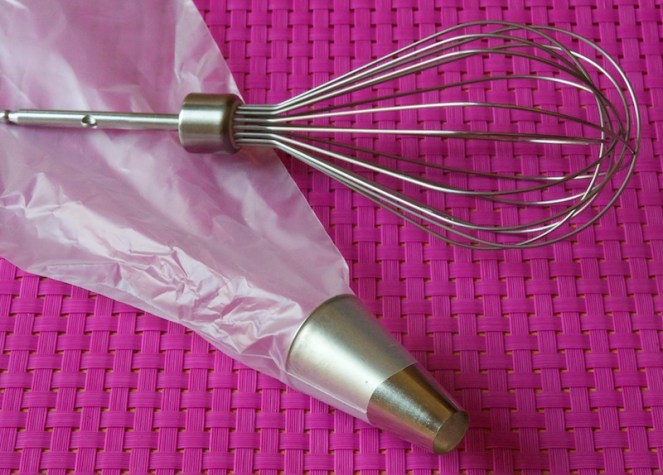
When making and assembling this dessert certain kitchen tools help with getting the job done faster… using an electric whisk to beat the cream and piping the berry mousse into the serving glasses using a piping bag fitted with a plain tipped nozzle.

Easy Berry Mousse

Ingredients:

  • 225ml whipping cream
  • 6 to 7 tablespoons uncooked raspberry jam or bought jam from a local farmers market

    to assemble

  • 6 glasses with narrow bottoms
  • 3 teaspoons raspberry jam
  • whole fresh blackberries
  • fresh thyme (optional)

How to make:  Pour the cream into a bowl and with and an electric whisk, whisk until thick and the cream holds its shape. Gently fold in the raspberry jam.

Assembling the dessert: Place a teaspoon of raspberry jam at the bottom of each glass, followed by a whole blackberry. Spoon or pipe the raspberry mousse evenly into each glass and top with another whole blackberry, garnish with thyme just before serving.

This dessert can be made several hours in advance, covered with cling film and stored in the fridge. Always serve chilled.

This post is part of the Sweet Adventures Blog Hop hosted by Christina from The Hungry Australian. See all the other delicious entries here.

posts · store cupboard

making vanilla extract, vanilla sugar, vanilla bean paste and vanilla salt

Vanilla is one of the most expensive spices in the world due to a labor-intensive and time-consuming process and as a result, most of the vanilla flavouring consumed today is a synthetic imitation of the real spice. Vanilla has a distinctive flavour (Vanillin), but is also noted for more complex aromas which are described as… honey and caramel-like, smokey, earthy, woody and floral, naming a few… all which contribute richness, warmth and depth of flavour to almost any food that vanilla is added too! Having a continuous supply of pure vanilla flavour at home for all your culinary needs is easy… few ingredients are required… with a little patience thrown in!

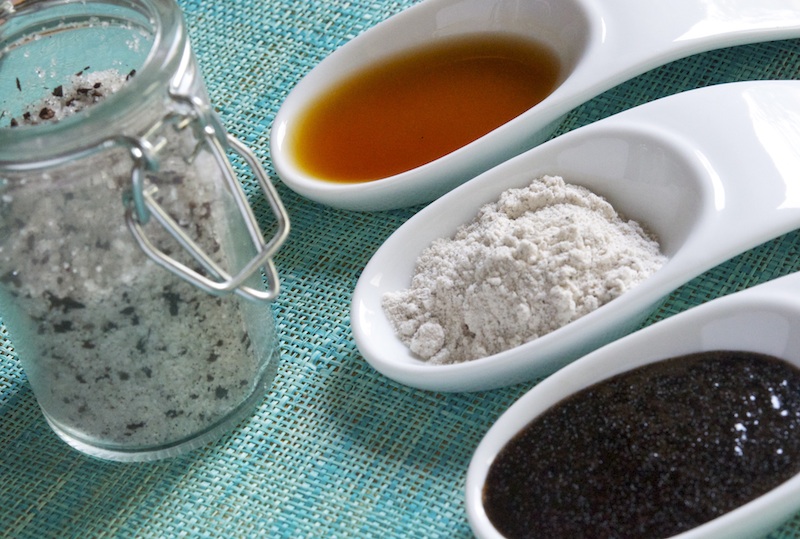
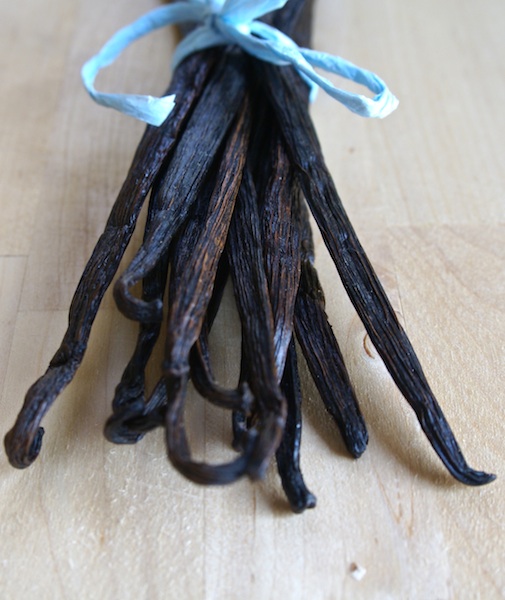
Making your own vanilla extract, whole vanilla bean paste, vanilla sugar, vanilla infused olive oil and vanilla salt requires the use of whole vanilla beans… purchased at supermarket prices would make all the above costly! Bulk buying different varieties and grades of vanilla beans (Madagascar, Tahitian, Indonesian, Indian, and Mexican) on-line from a reliable source like Beanilla or Amazon is much more cost-effective! The Island of Bali in Indonesia has been a holiday destination for our family over the years and I have always brought back a supply of whole vanilla beans which always get put to good use in the kitchen! Regardless of where your vanilla beans come from, they all should be soft and pliable with a dark skin.

Because of cultural and religious backgrounds some people will not use pure vanilla extract in cooking and baking as it contains alcohol, which is prohibited! Being sensitive to this issue using the home-made vanilla sugar and pastes means that pure vanilla flavour can be enjoyed by all. The recipes below are only guides and can all be taken with a pinch of vanilla... I mean salt! Feel free to experiment ( or check other recipes) with the strength of vanilla flavour in each recipe… taste is personal!

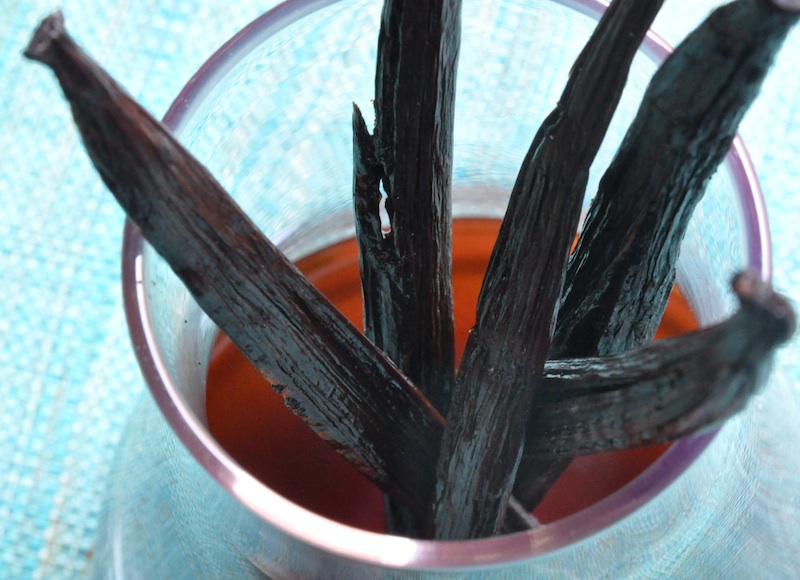
Vanilla Extract: Pure vanilla extract must contain 13.35 ounces of vanilla beans per gallon of liquid and contain 35% alcohol… according to US Food and Drug Administration regulations! So rounding that equation roughly (you can be more precise if you like), would mean almost one ounce of vanilla beans are required for each cup of liquid! Depending on the grade and moisture content of the vanilla beans, you might use( approximately)  7 to 10 vanilla beans per cup (250ml) of liquid and this is for a single strength vanilla extract! With the above in mind…  some recipes have suggested 1 or 2 vanilla beans per cup of liquid and in my experience this will not yield a strong vanilla extract! As alcohol is needed to extract the vanilla flavour use vodka (min 35%), as it is a neutral spirit!

Home-made Vanilla Extract

Ingredients:

  • 1oz (25g) vanilla beans (approx. 7 to 10)(a few more if you like)
  • 250ml vodka
  • 6 months of patience

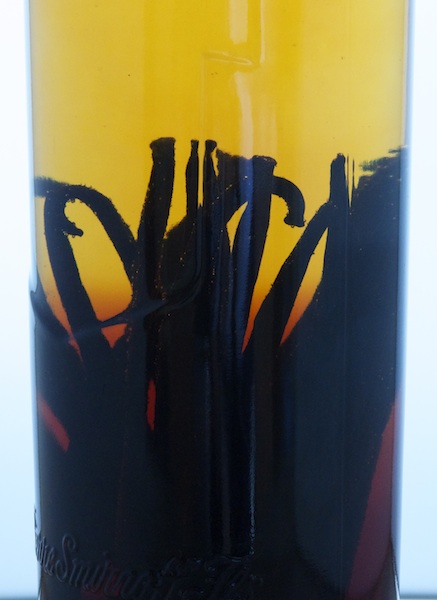
How to make: With the tip of a sharp knife, slit the vanilla bean lengthwise down the middle, exposing all the tiny seeds. Place the vanilla beans into a clean sterilized  bottle or jar, pour in the vodka to completely cover all the vanilla beans. You might need to half the vanilla beans, depending on the size of bottle or jar being used.

Cover with a tight-fitting lid and shake, this will release some of the tiny vanilla seeds and  help the flavour extraction process. Sore in a cool dark cupboard and for the first week shake the contents of the bottle each day for the first week. Afterwards shake the bottle once a week for the next month or every now and then if you remember!  Leave to mature for 6 months before using, during this time the alcohol smell and taste will mellow and the vanilla flavour will develop!

Tip: When I need some vanilla beans as a garnish… remove a vanilla bean from the bottle of vanilla extract, dry with some kitchen paper, cut into thin strips and place on top of desserts, ice-cream, cupcakes and also add some to mulled wines!

Adding more vanilla beans and topping up with more vodka to a dwindling (all ready matured)  supply of vanilla extract is not something I do… I prefer to start the whole process again using new vanilla beans.

Vanilla Sugar

Ingredients:

  • 2 vanilla beans, split lengthways
  • 500g caster sugar

How to make: Simply place the 2 vanilla beans and the sugar into a clean sterilized  jar, making sure the vanilla beans are covered completely with the sugar. Cover with a tight-fitting lid and leave the sugar and vanilla to infuse for about a week before using. The sugar will be perfumed with a subtle flavour of vanilla. Overtime the vanilla beans become dry and brittle so you can remove them from the jar, replace with a new vanilla bean and top up with more sugar, if liked.

OR

Concentrated Vanilla Sugar

Ingredients:

  • 3 vanilla beans
  • 100g granulated sugar

How to make: Cut the vanilla beans into small pieces using scissors and place into a small food processor along with the sugar. Process until finely ground, then pass through a fine sieve, return any bits that did not pass through the sieve back into the spice grinder. Repeat the process again or until all the vanilla and sugar has been finely ground. Place into a clean sterilized jar and cover with a tight-fitting lid, leaving the vanilla and sugar to infuse for a week before using. This sugar will have a strong vanilla flavour which you can dilute (the flavour) by mixing a couple of teaspoons of concentrated vanilla sugar with other sugars… icing sugar, brown sugar or caster sugar, for an instant vanilla sugar.

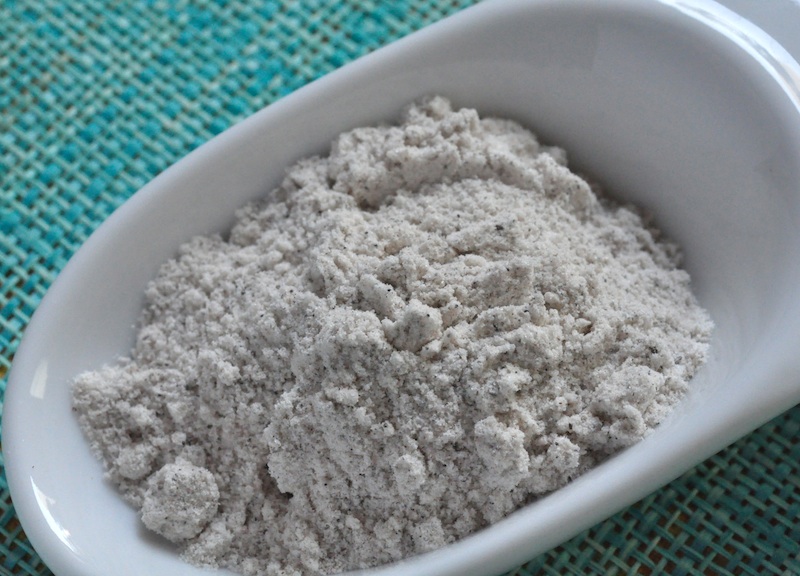
Pure Vanilla Powder: Some of the vanilla beans that I had were a tad on the dry side and not as pliable as before which makes them ideal for grinding into a fairly fine powder, which I used for the vanilla bean paste and vanilla salt!  Cut the required amount of vanilla beans into small pieces using scissors and place into a spice grinder. Grind the vanilla beans into a fine powder, then pass through a fine sieve, return any bits that did not pass through the sieve back into the spice grinder. Repeat the process again or until all the vanilla beans have been finely ground.

Whole Vanilla Bean Paste

Ingredients:

  • 50g sugar (use vanilla sugar if you have already made some)
  • 50ml water
  • 1/4 teaspoon corn syrup (optional)(helps stop sugar crystals forming)
  • 4 vanilla beans, finely ground

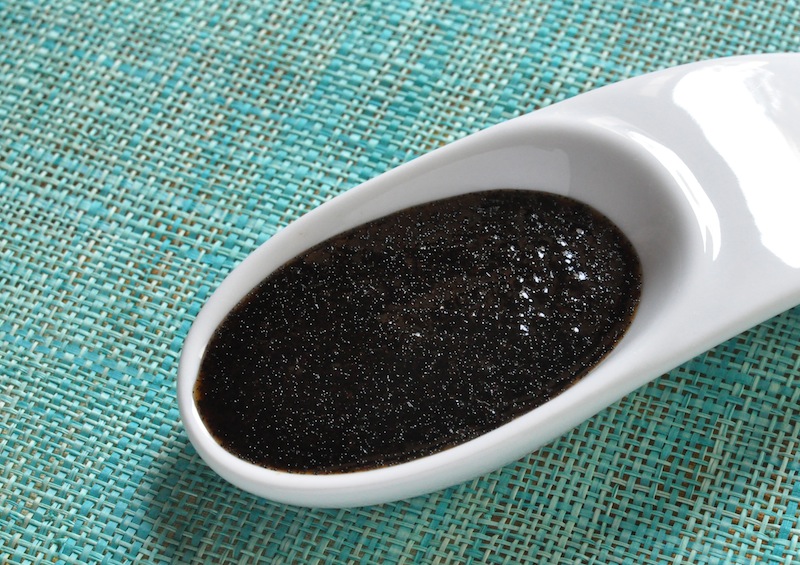
How to make: Combine the sugar, water and corn syrup in a small saucepan and place over a low heat, stir with a wooden spoon until all the sugar has dissolved. Increase the heat and bring the syrup to a boil for about a minute. Remove from the heat and cool. Pour the cooled syrup into a clean sterilized jar and stir in the powdered vanilla beans. Cover with a lid and store in the refrigerator, leave for a couple of days before using. Use within six weeks. If a recipe calls for 1 teaspoon of vanilla extract use 1/2 teaspoon of vanilla paste instead.

Vanilla Salt

Ingredients:

  • 4 tablespoons of gourmet sea salt, Fleur De Sel de Camargue or Maldon
  • 1 teaspoon of pure vanilla powder

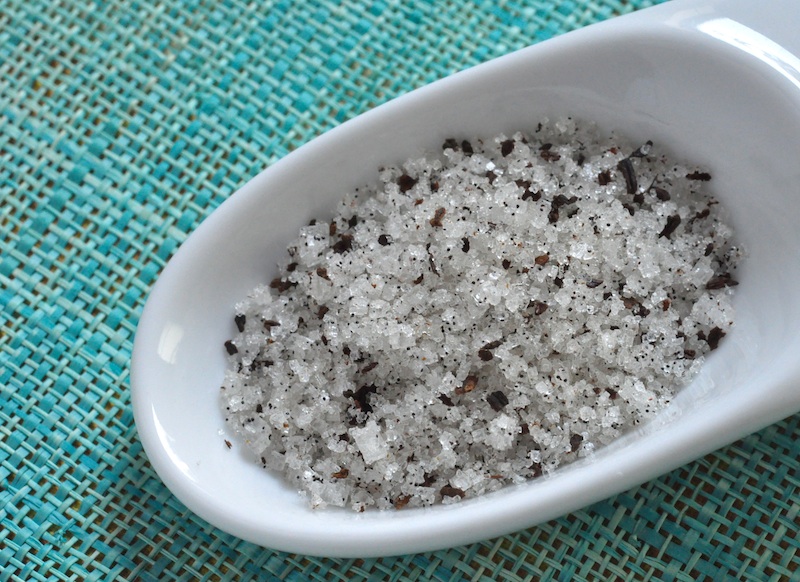
How to make: Mix salt and vanilla powder together and place into a small sterilized jar and cover with a tight-fitting lid. Store in an airtight container leaving the salt and vanilla to infuse for one week before using.

Add a little vanilla saltness to your food… use as a garnish or sprinkle over foods just before serving on nuts, caramel flavored sweets, cookies, ice cream, macarons, scrambled eggs, quiche,canapes, grilled prawns and scallops are just a few ideas!

 Do you make your own vanilla extract?  Have you any great ideas for using whole vanilla beans?