drinks · food + drink · posts

Hot Turkish Wintertime Drink – Salep

Exploring and wandering the wonderful streets of Istanbul, tea and coffee stops are inevitable. Recharging the batteries and soaking up the atmosphere of a bustling city steeped in history and culture. Istanbul is a busy  city all year round… literally heaving with people!  On entering one of the many cafes, and scribbled on a chalk board,  I noticed hot Salep on the menu and was told… “we make the best!” Ditched the usual Turkish Tea and ordered Salep. Who was I to argue whether it was the best, this was my first taste of this very popular Turkish wintertime drink.

A nice change from drinking a hot chocolate or a winter spiced latte, this hot thickened milky drink (the taste of semolina was the first thing that came to mind) was served with a dusting of cinnamon on top.  Although a little overly sweet I did enjoy this warming drink and found Salep quite filling.
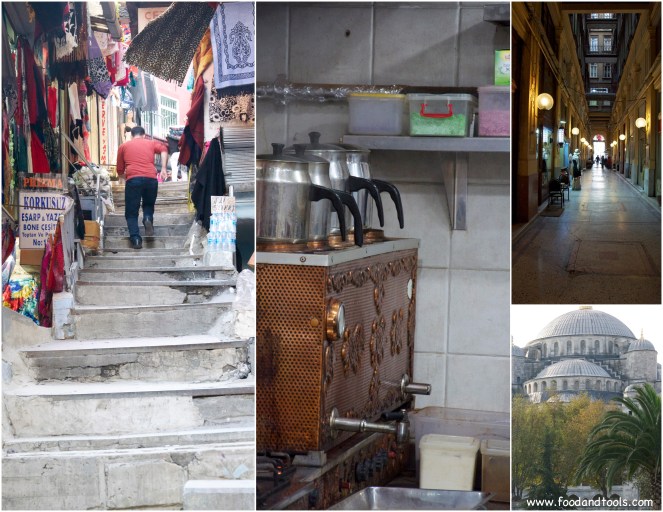
Salep (Sahlab, Saloop,) is a nutritious starchy flour derived from the tuberous root of a certain species of Orchids. In Turkey export of pure Salep flour is apparently illegal, as over harvesting of their Orchids (Turkey known for the best Salep flour) has led to its decline. Salep is also used in the famous Turkish Dondurma ice cream.

Throughout the Middle East, Mediterranean, Europe and Asia drinks made using Salep were enjoyed for centuries and touted as an aphrodisiac (a botanical Viagra) and a restorative for the young and old. London’s industrial era served many a labourer Saloop (flour derived from British Isle Orchids ) in the early morning hours, a hearty drink flavoured with orange blossom and rose-water to kick-start a long and hard-working day.

Pure Salep flour is expensive and many use cornflour as a substitute or use a mix of both (both have thickening qualities) and say it tastes like the real thing! Some say Salep flour has little or no taste and others say it has a slightly floral taste. Can’t say I noted a floral taste when drinking Salep as the cinnamon was the dominant flavor. Maybe some Salep drinking experts can enlighten me on the subject.

Purchased a box of flavoured salep/sahlab at a local supermarket which contained the ingredients; sahlab, sugar, mastic, rose and orange blossom flavour to try… it turned out way too sweet and overly perfumed for my liking.

This is my way of making a faux style Salep (which tastes just as good) using glutinous rice flour as a thickener, preferring the creamy results it gave over the cornflour.  However, cornflour may be used and here is another recipe and other information on Salep. Camping season has begun in Bahrain and the desert can turn very cold… so why not treat family and friends to this warming winter time drink.

1-DSC_0619-001

Winter Warming Hot Salep

Ingredients:

  • 8 level teaspoons of glutinous rice flour (sweet rice) (found at asian supermarkets)
  • 1 litre of full-fat or low-fat milk
  • sugar or honey, to taste

Flavour Salep with:

1/4 teaspoon orange blossom water OR rose-water, per cup

OR 

a light dusting of cinnamon powder

garnish with some finely chopped pistachio, if desired.

How to make: Add the glutinous rice flour into a medium saucepan, using a whisk, slowly mix in the milk until smooth. Bring the milk mixture to a boil, stirring constantly with a whisk or wooden spoon. Reduce heat and simmer gently for about 3 minutes to thicken and cook through, stirring often. Sweeten with sugar to taste, add desired flavouring and pour into cups, serve hot. Alternatively, pour the unflavoured Salep into cups and let each person flavour their own. Serves 4

Have you tried Salep before? Do you have a favourite wintertime drink?
posts

Food Photography and Styling Workshop Day 2

Arriving at the Miele Gallery and still digesting the mass array of food from the previous days workshop…  it was a quick cup of coffee then straight into a busy days schedule! Metta (Food Stylist and Photographer) gave each team assignments to work on throughout the day, which would later be evaluated, discussed and critiqued at the end of the workshop!

Sally Prosser (Social Media Strategist and Activator) ran us through some social media strategies for food bloggers… leaving us with thoughts to ponder on, reasons for blogging and our goals! Interactions with Twitter, Facebook, Pinterest and other social media platforms were covered, discussing some of their advantages and disadvantages!  Afterwards Meeta went through some basic post-processing, using lightroom and Photoshop to enhance images… touches that make such a difference using good post-processing software!

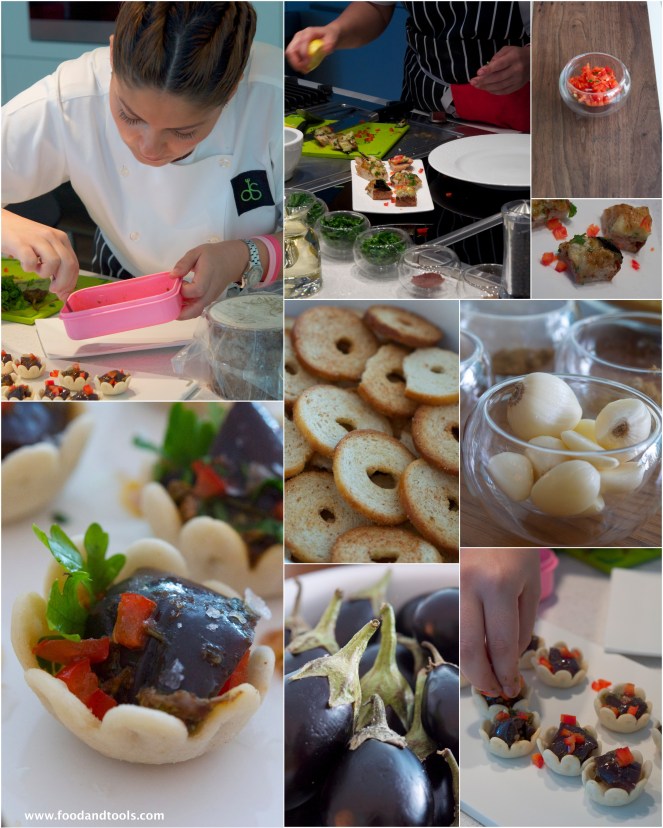
Somewhere between all this information from Sally and Meeta we had some very tasty morsels (Mreqqed – Marinated Eggplant above) prepared by the lovely Dima Sharif, a food writer, educator and recipe developer!

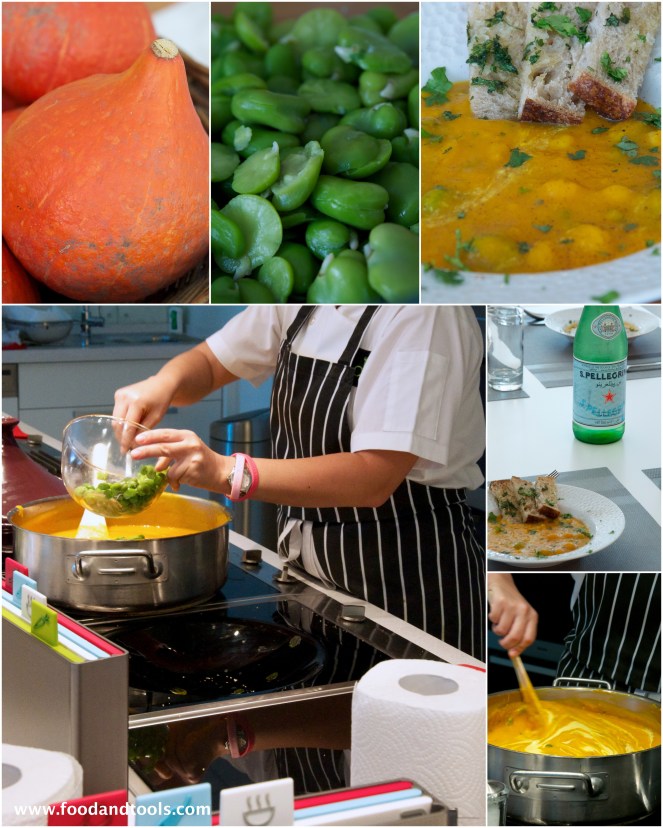
Dima, already very busy in the kitchen was preparing a Traditional Moroccan Menu (Pumpkin Soup, Lamb and Aubergine Tagine, Couscous with Toasted Almonds and Sesame Crusted Almond Cookies) for us to shoot and eat… and a delicious feast it was!

Running through one of her own styling demos Metta showed how her thought process works when styling a photo shoot. Choosing appropriate props, freshness of ingredients, creating a certain mood, colours, textures, the story you want to tell, placement of props and food, lighting, focus and angle are some of the important elements to think about before taking a photograph!

Armed with all the information Metta had given us, we worked our way through our assignments, each taking on roles as cooks, photographers and stylists as the day progressed…  it really was a very action packed kitchen!

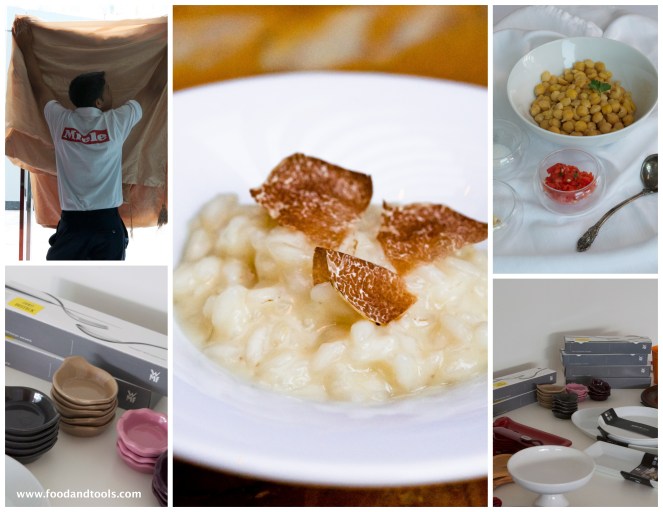
Cynthia Farhat and the Miele team were always ready to give a hand when needed, which was much appreciated! Tavola supplied the lovely props and utensils for us to use throughout the workshop… glad we have a Tavola in Bahrain! Working on some post-processing, each team presented some final images for evaluation and it was really interesting to see how each had interpreted and styled their given teams assignment!

A delicious finale dinner prepared by Chef Russell from Lafayette Gourmet and a Spanish paella fiesta from Tapeo ended the workshop! The food on this workshop was outstanding but I must say, the taste of the Heritage Angus Steak from Canada, simply pan seared on a griddle was truly amazing… this meat could convert a vegetarian!

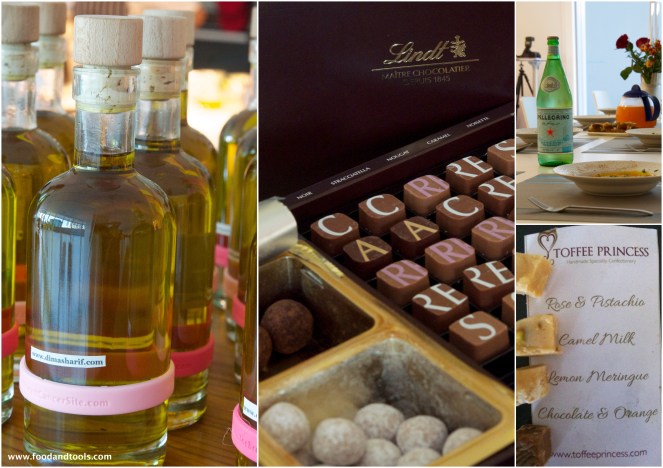
Goodie bags were presented to us on leaving, so thank you: Dima Sharif for her special bottle of Olive Oil from her family olive groves, the marinated eggplants, jar of fish spice rub (all put to good use), chocolate truffles and recipe booklet! Lindt Chocolate for the boxes of luxury chocolates! Aqua Panna and San Pellegrino water and cute bottle opener! Lime and Tonic Gift Voucher! Toffee Princess for her delicious Scottish tablet!

Sally and Meeta… I thoroughly enjoyed The Food Photography and Styling Workshop and meeting and working with all the lovely group of other participants! You have left me inspired to better my photography skills and take my food photography to another level! 🙂 🙂 🙂

Other blog posts and photographs from the Food and Photography Styling Workshop, not everyone has a blog so I will link up were possible and add others as they become available:

Meeta from What’s for Lunch Honey (conducted above workshop) | Sally from My Custard Pie  also here (the host of above workshop)  | Shy form Cooking with Shy – Facebook Page photographs | Catherine from Cat in The Dunnes | Antone flicker photographs | Minna from Naked Plate

baking · food + drink · posts

Victoria Sponge Cupcakes with Orange Buttercream

A fond memory recalled from childhood, the familiar words called out by my parents… “your tea is ready,” a signal letting us know our evening meal was on the table. High Tea or as we called it our “Tea,” was a light savoury meal that would be eaten somewhere between the hours of 6pm to 7pm.

Afternoon tea (3pm to 5pm) reserved for special occasions usually involved serving a selection of delicious home-baked cakes, light fluffy scones and crustless sandwiches, all washed down with copious amounts of freshly brewed tea.

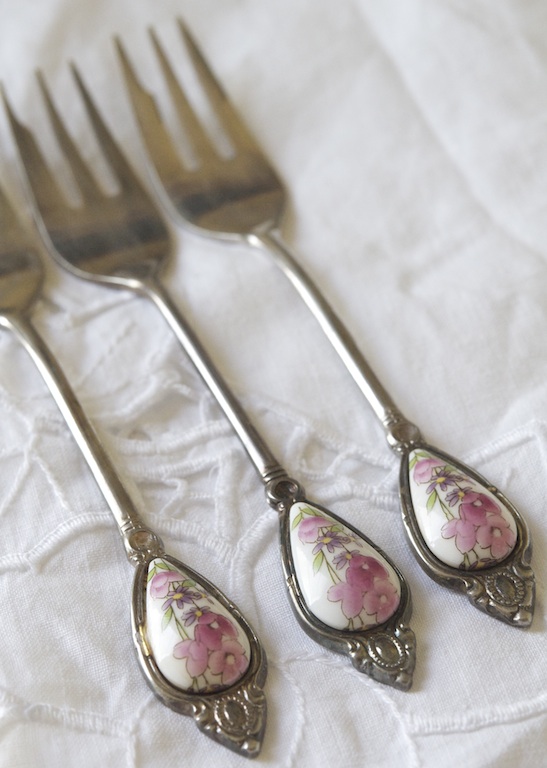
I love how this quote sums up afternoon tea and I believe it is a special ceremony, a visual feast, a time to take out your pretty china cups, decorative plates, quaint cutlery, antique tiered cake stands and linen napkins…  and spoil all the lovely people in your life.

“Under certain circumstances there are few hours more agreeable than the hour dedicated to the ceremony known as afternoon tea.” ― Henry James, The Portrait of a Lady.

Afternoon tea would not be complete without a selection of cakes, so you might like to try other recipes such as, Rocky Road Chocolate Cakes, Matcha Tea and Lemon Cupcakes , Mini Pavlova Bites, Chocolate Guinness and Blackcurrant Cupcakes or Welsh Cheese Cakes.

Victoria Sponge Cupcakes with Orange Buttercream

Ingredients:

  • 110g butter, softened
  • 110g caster sugar
  • 1 teaspoon finely grated orange zest
  • 2 eggs, lightly beaten
  • 25g self-raising flour
  • 75g all-purpose flour
  • 2 teaspoons of fresh orange juice

You will need a 12 hole cupcake tin lined with paper cases and a piping bag and nozzle.

for the buttercream

  • 110g unsalted butter, softened
  • 1/4 teaspoon of finely grated orange zest
  • 200g icing sugar, sieved
  • 1 or 2 teaspoons of fresh orange juice
  • sugar flowers and strips of candied orange peel, to decorate (optional)

How to make:  Pre-heat the oven to 180°C/350°F/Gas 4/Fan 160°C.

Add the butter, caster sugar and orange zest into a mixing bowl and using an electric mixer, beat ingredients together until light and fluffy. Add the beaten eggs (a few tablespoons at a time) to the cake mixture, beating well after each addition.

Add in the sifted flours and fold into the cake mixture with a spatula until the mixture is smooth, stir in the milk. Divide the cake mixture evenly among the prepared baking tin. Bake cupcakes for about 18 to 20 minutes or until the middle of the cupcake springs back when lightly pressed with fingers. Remove from the oven and let cool for a few minutes before transferring the cupcakes to a wire cooling rack.

For the buttercream: Add the butter and orange zest into a mixing bowl,  beat with an electric mixer until smooth. Gradually add the sifted icing sugar into the butter, beating between additions until all the icing sugar has been incorporated. Beat in the orange juice. Spoon the buttercream into a piping bag fitted with the desired nozzle,  pipe the buttercream on top of each cupcake. Decorate with edible sugar flowers and candied orange peel, if desired.

[\recipe]

This post has been part of the High Tea Sweet Adventures Blog Hop hosted by Jennifer from Delicieux where you will find all the other delicious High Tea entries on her blog!