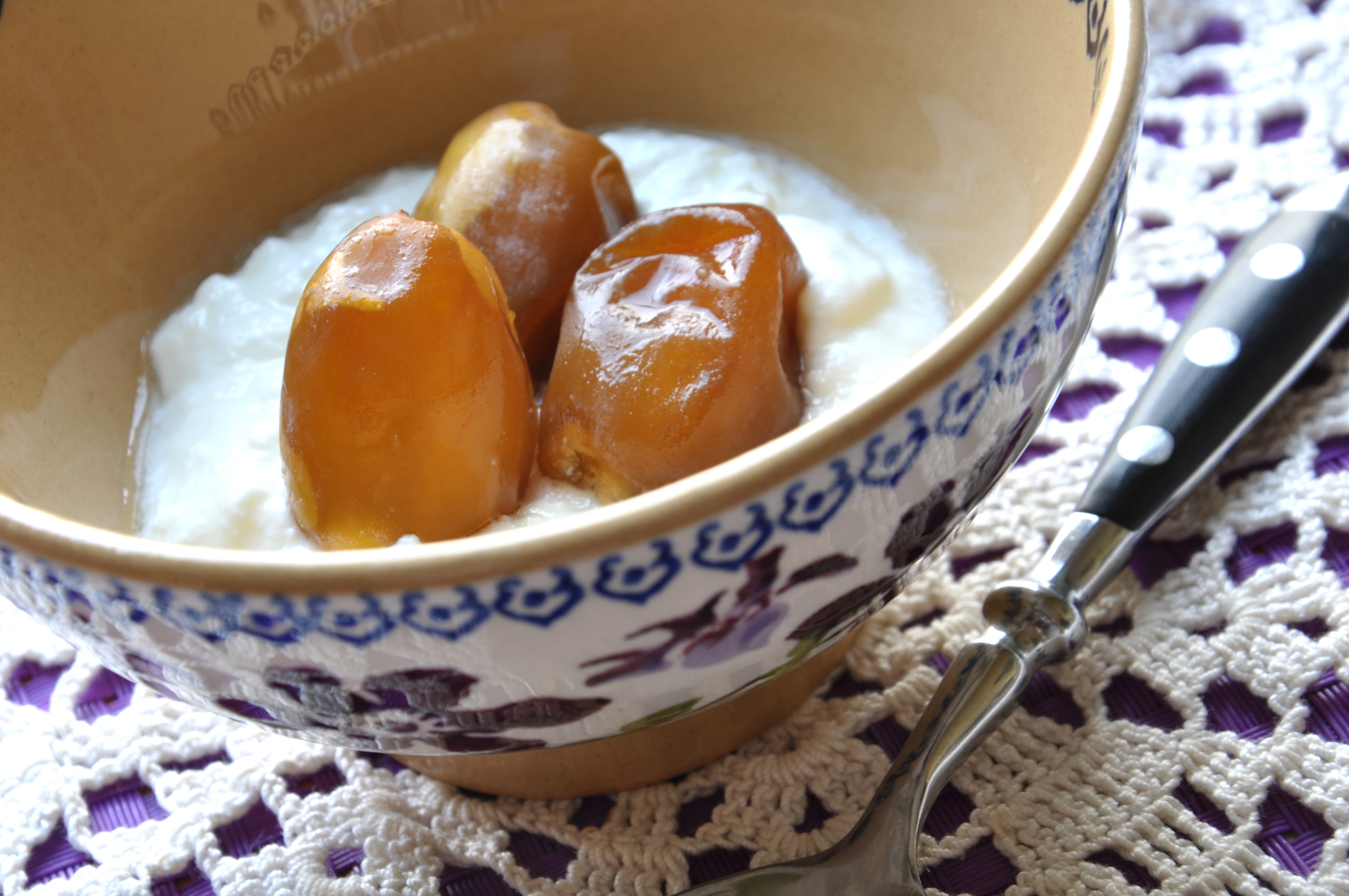
 Used some of my dwindling supply (from the freezer) of Ekhlas dates which were from our garden date palms. Dates and yogurt a breakfast favourite…!
The New Year has begun and the food magazines are full of great recipes helping us start the year with healthy eating plans! Having acquired a new electric Cuisinart Yogurt and Cheese Maker, thought I would kick-start the new year and introduce the family to some “good bacteria” named Streptococcus thermophilus and Lactobacillus bulgaricus, both needed for converting milk into yogurt. Now I know I can go to a health food store or a supermarket and buy yogurt (you need to do this for your first batch anyway) with live cultures… but making my own yogurt has given me a great sense of satisfaction and culinary pride…and that you cannot find in any store-bought pot of yogurt!
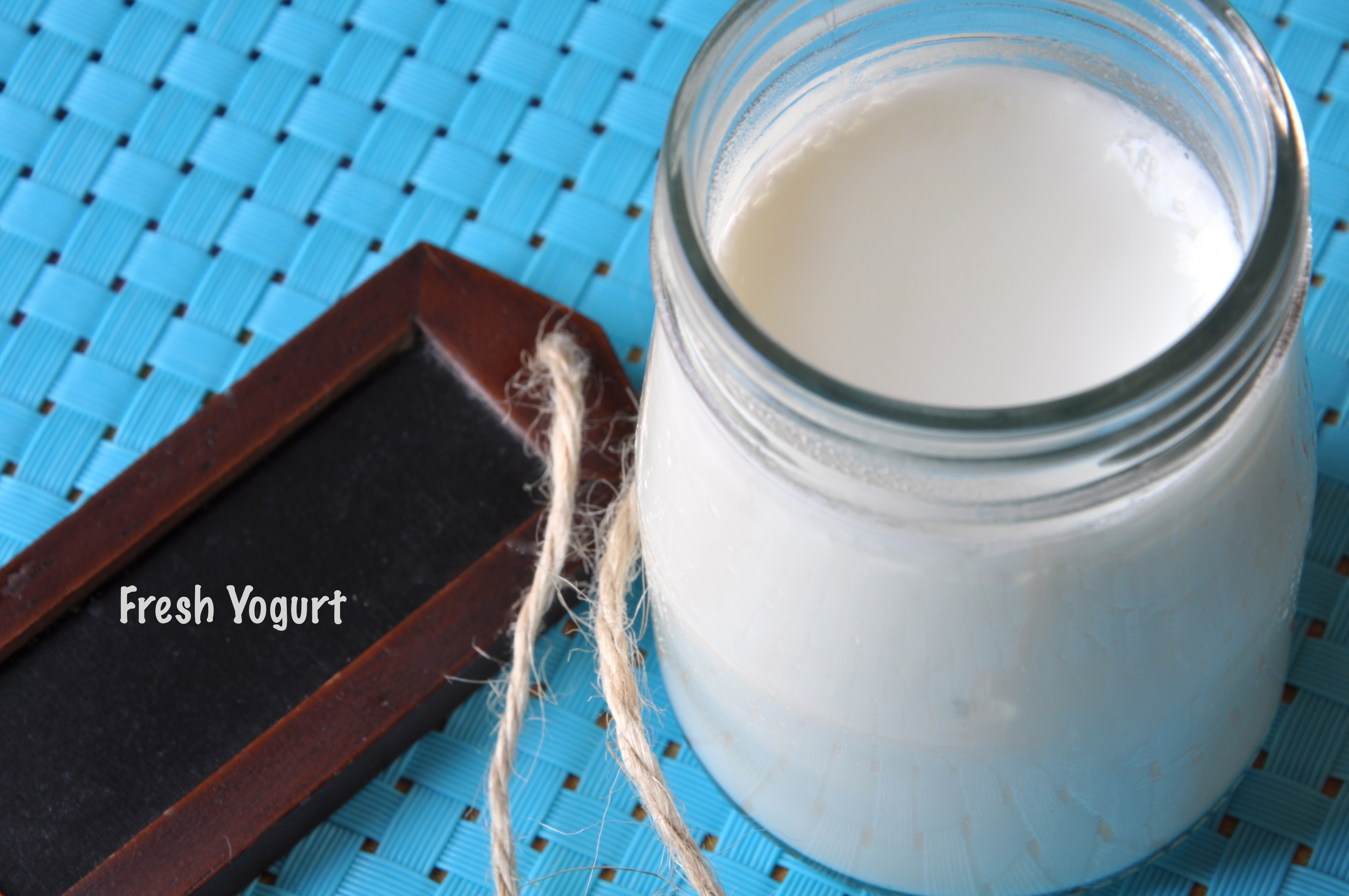
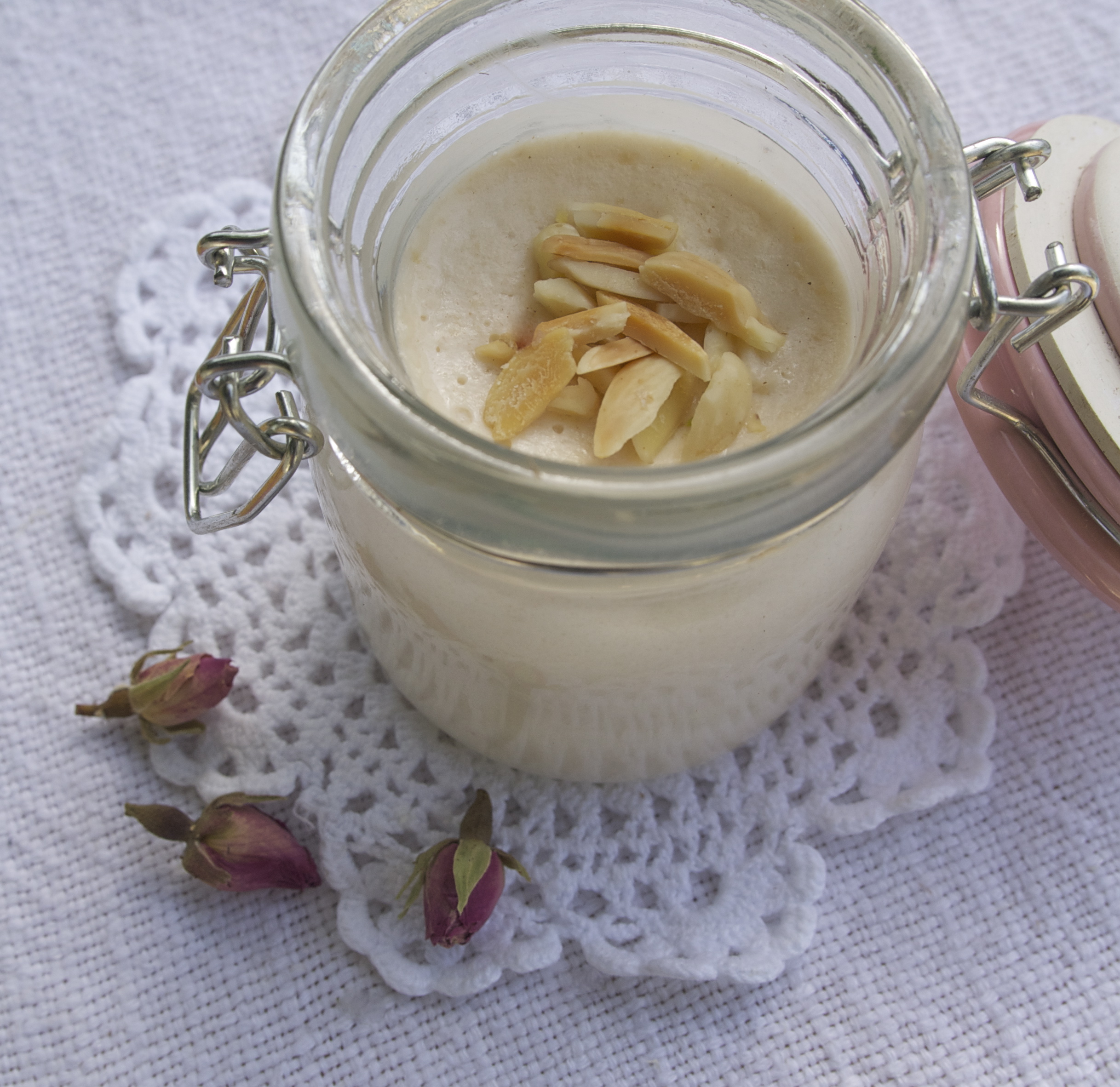
The glass jars that come with the yogurt maker are really handy for storing and serving the yogurt
Yogurt making is in fact a way of preserving milk by fermentation and has been around for many many years with no fancy kitchen appliances involved… some kitchen appliances make cooking easier and it’s 2012.
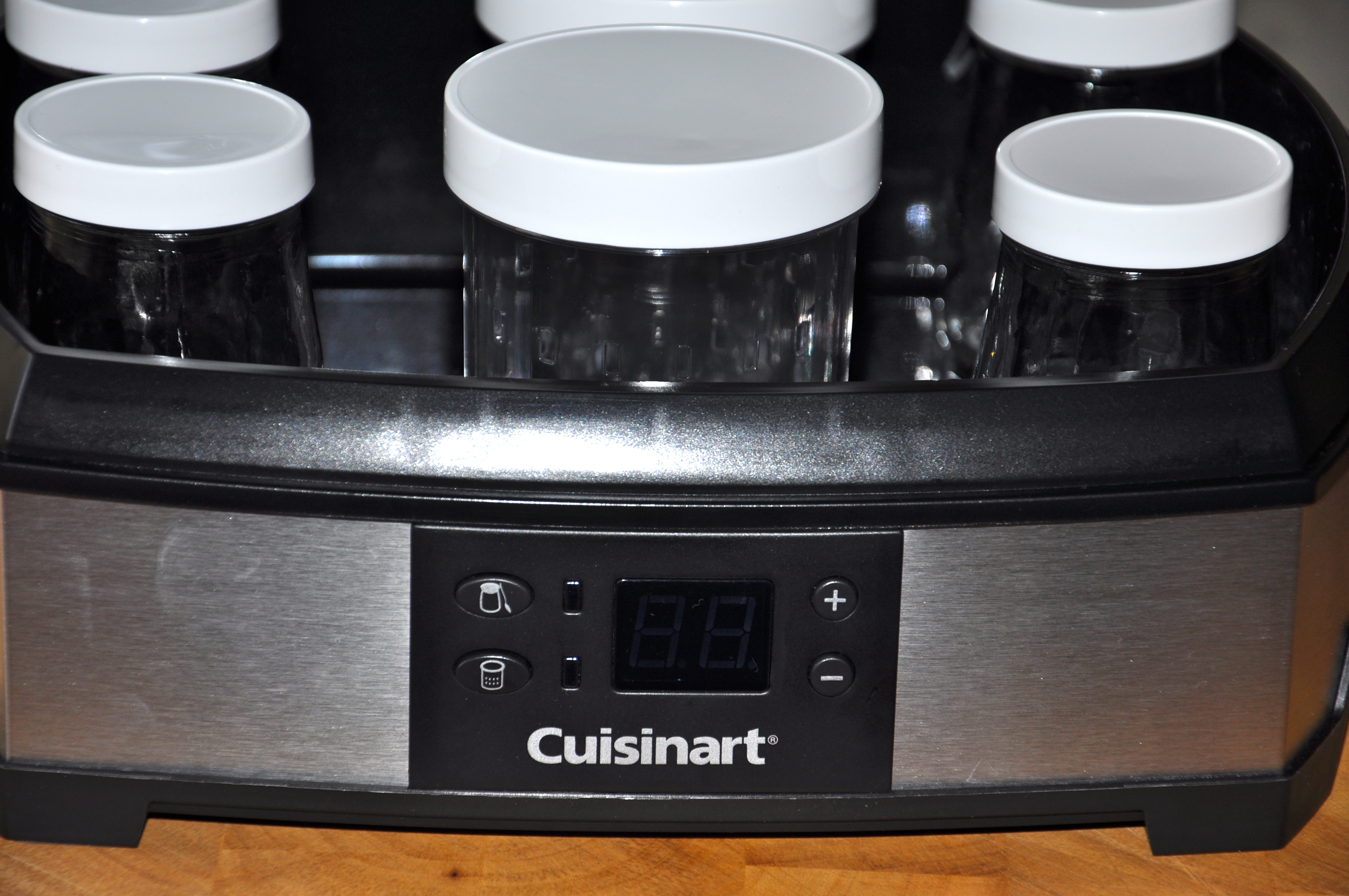
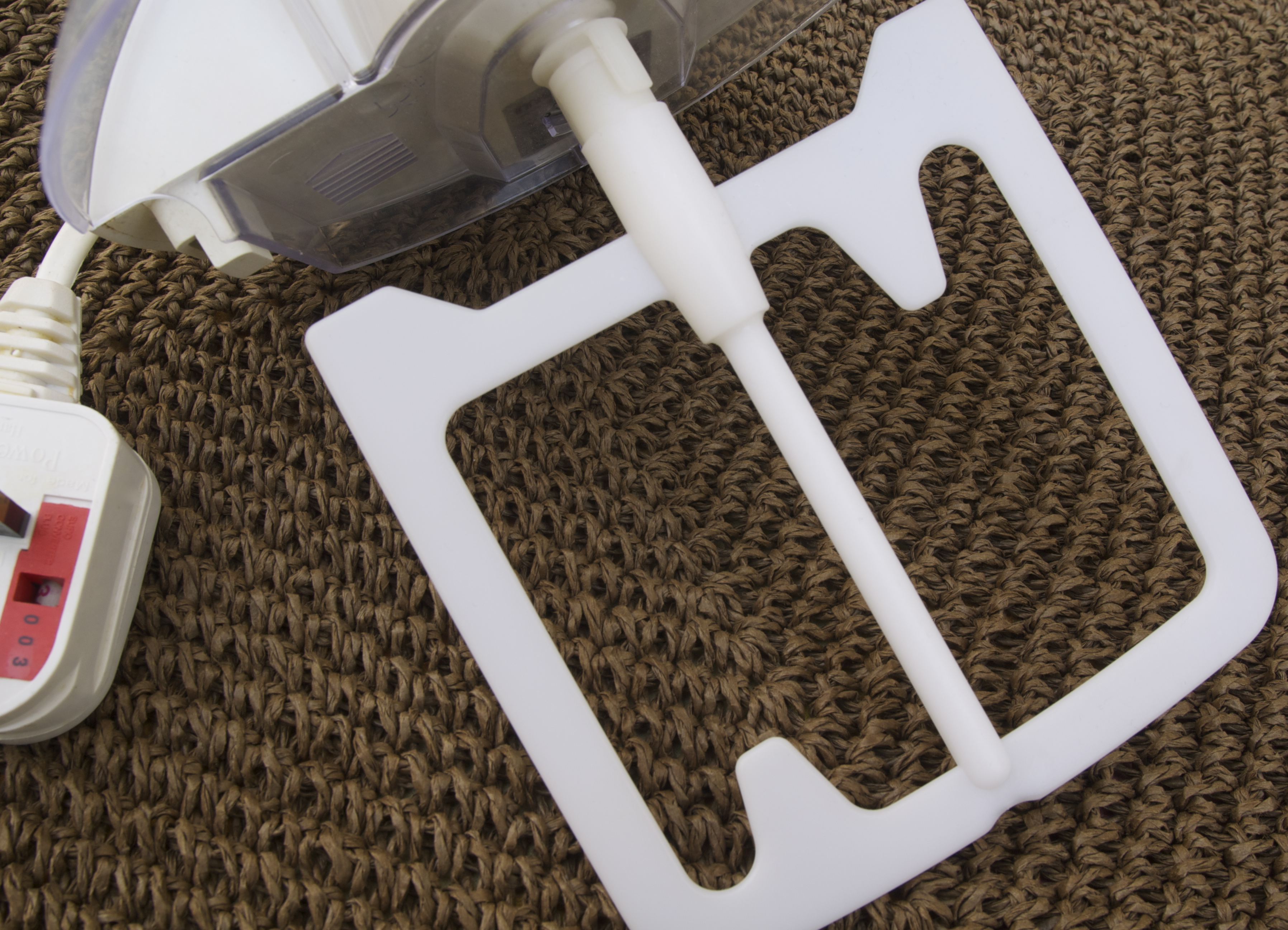
My new kitchen appliance
Many people have had success without appliances or thermometers, using ovens, crock pots, flasks, wrapping pots with towels, checking the temperature with their fingers… but I wanted to help my friendly bacteria grow without competition from unfriendly bacteria that might spoil all my yogurt making efforts… plus I like using kitchen appliances and tools.
There is a little science attached to yogurt making which you need to follow in ordered to achieve the desired results. My first try was disappointing and I ended up with a very watery type of yogurt that did not set or taste anything like yogurt should taste. What went wrong? My guess… it could have been the yogurt starter I used. Maybe I should have added the dried powdered milk before heating the fresh milk. Maybe I should have sterilized the jars rather that rinsing. Maybe the milk was too hot when I added the yogurt starter and I killed the friendly bacteria. So, adhering to some science about the why’s and how’s of yogurt making I made my second batch… success!
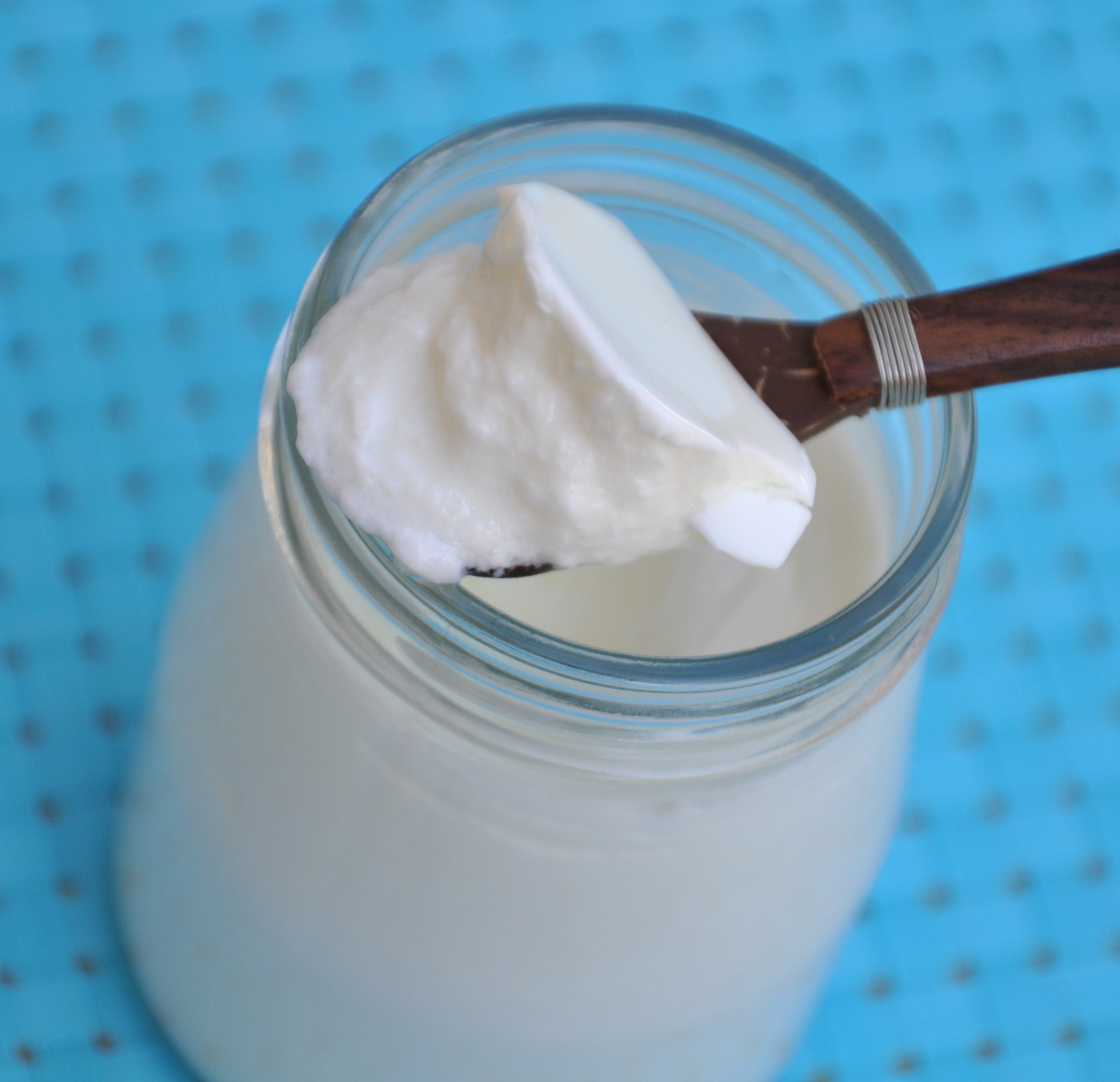
Thicker yogurt with a creamy consistency are the types I prefer but low-fat and other types of milk like soya and goats milk can also be used in yogurt making which of course will affect the texture and taste. Wonder what yogurt from camels milk would taste like!
The choice of natural yogurt with live cultures used as a starter can also give variations on final taste. Different types of freeze-dried cultures for yogurt making can be bought on- line.
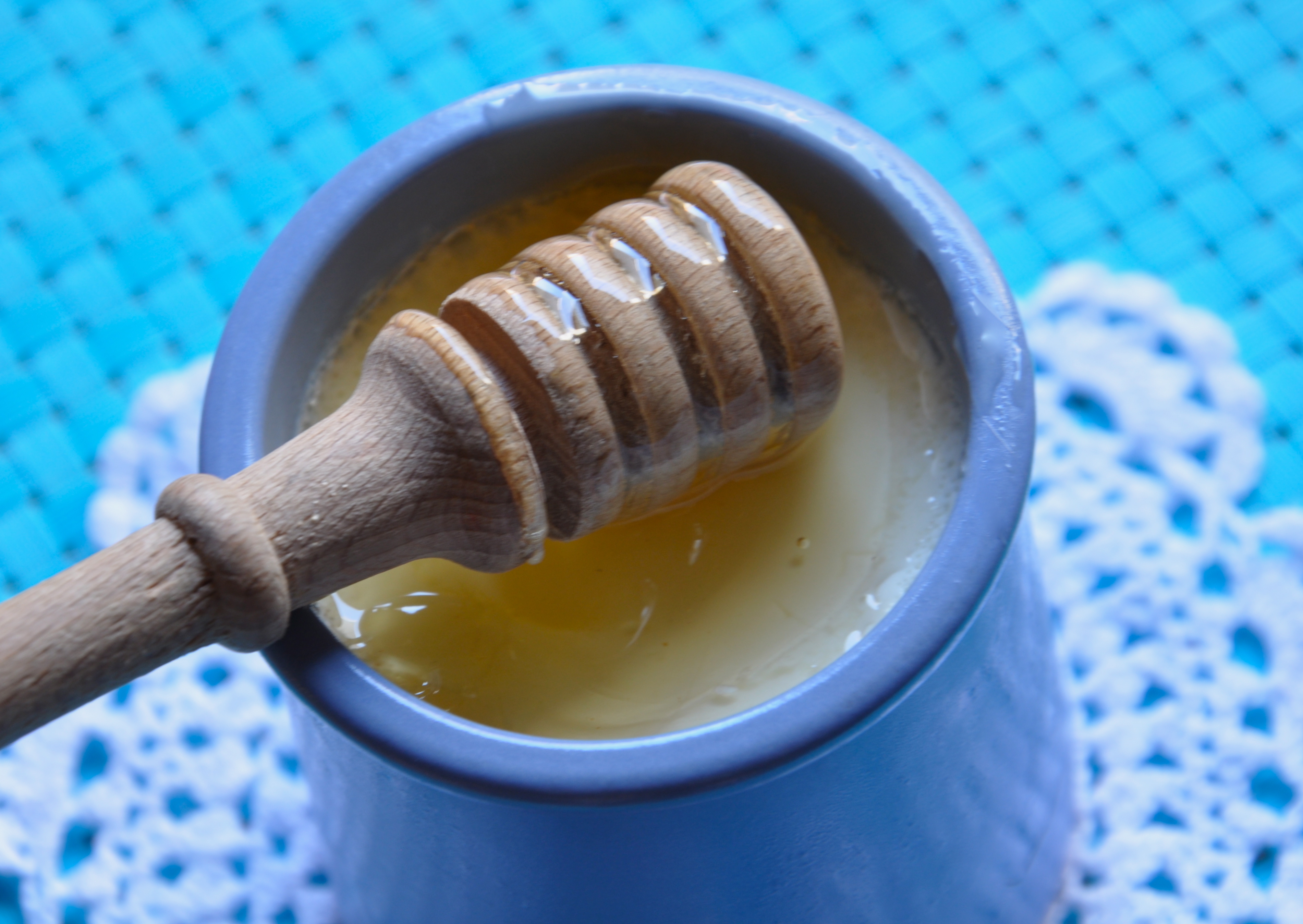
My little stash of fresh honey which a friend kindly brought back from Yemen for me… perfect partner with yogurt.
Home-made Yoghurt
Ingredients:
- 600ml whole milk ( richer and creamier)
- 3 tablespoons dried powdered milk (for thicker consistency) (optional)
- 1 tablespoon of natural yogurt with live cultures (needed as a starter for your first batch after which you can use your own yogurt as the starter)
How to make:
Turn on the yogurt maker to pre-heat.
Pour the milk into a saucepan, add the dried milk powder and whisk gently to incorporate. Place the saucepan on medium heat and slowly bring the milk to a temperature of 85°C (checking with a digital thermometer). This helps to kill any other un-wanted bacteria that may be lurking around.
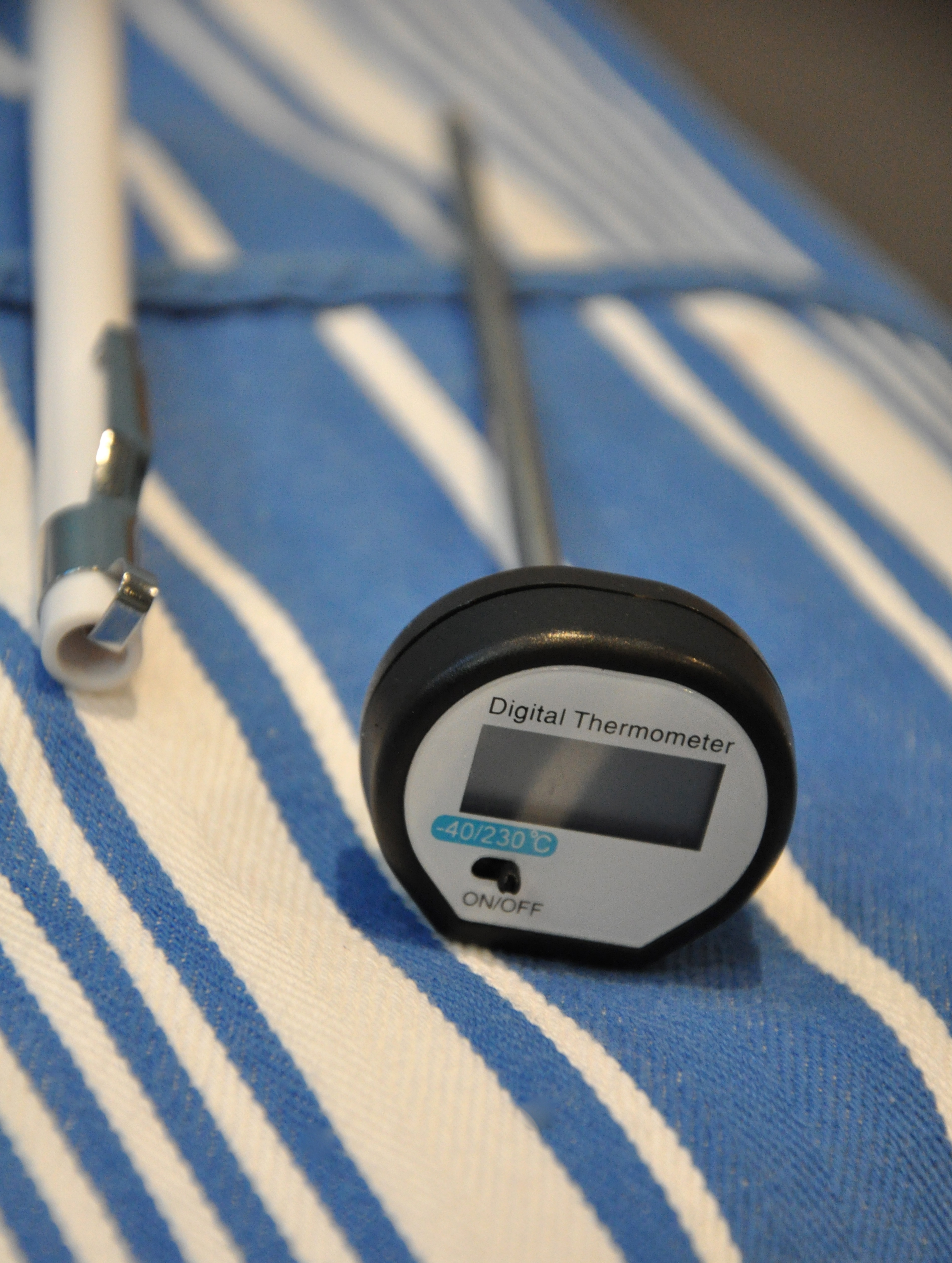
No more guessing… a digital thermometer makes it easier!
Remove the saucepan from the heat and quickly cool the milk down to a temperature of 45°C ( ideal temperature for incorporating the yogurt culture ) by placing the bottom of the saucepan in a few inches of cold water.
While the milk is cooling, sterilize the 6 glass jars by filling them up with some boiling water from the kettle.
Add the yogurt culture to the cooled milk and whisk gently to incorporate.
Pour the hot water from the glass jars and keep them turned upside down on a wire cooling rack for a minute or two, the heat from the glass will dry them out, do not dry with a cloth as you may introduce bacteria that could end up spoiling the yogurt.
Pour the milk into the jars and place then into the yogurt maker (without their lids), place the cover on top and leave the milk to ferment and set for 8 hours un-disturbed.
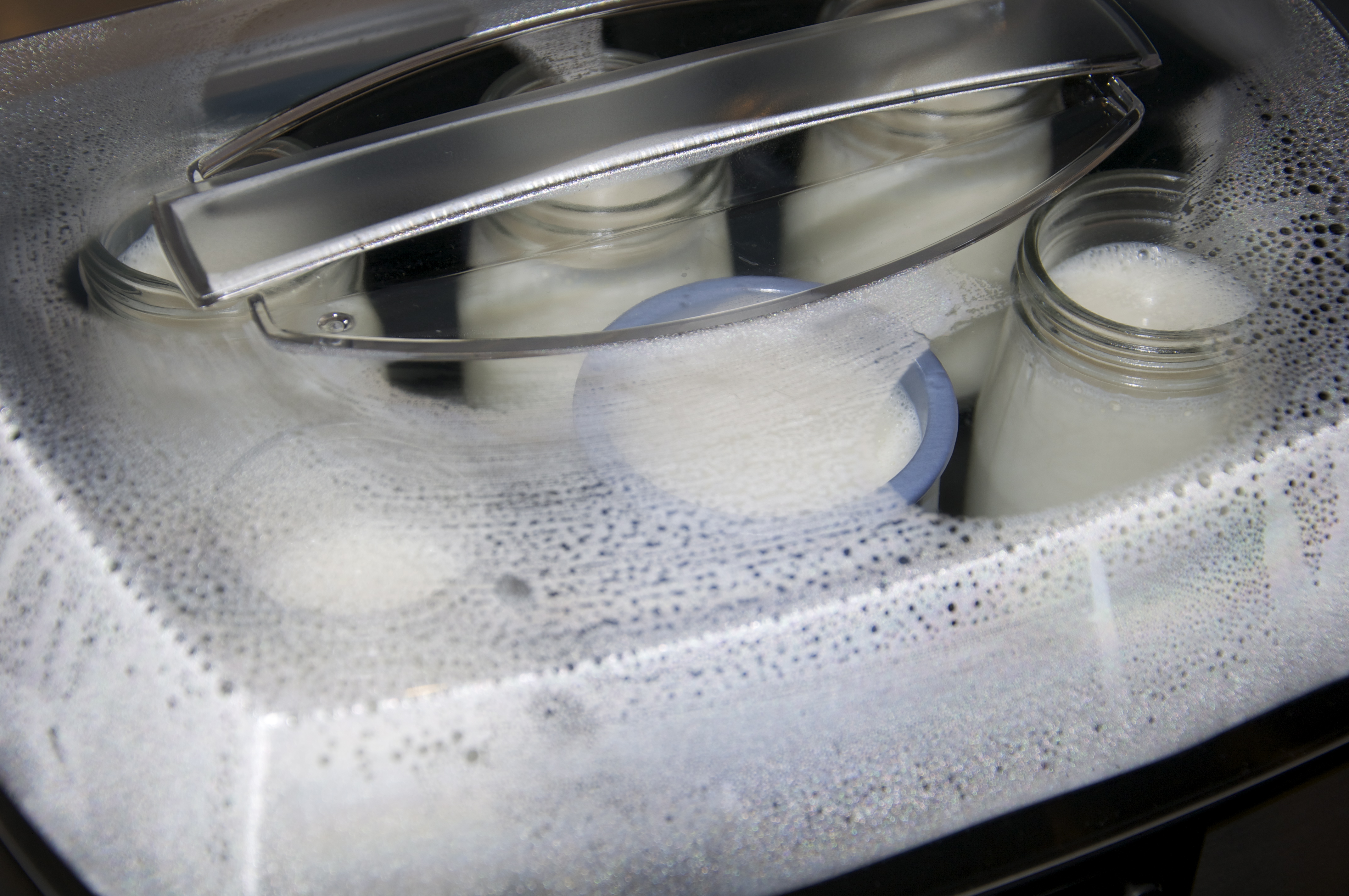
Yogurt maker in action and the ” good bacteria” doing their job”
After the incubation time has finished remove the jars from the yogurt maker and cover with the lids and store in the fridge for at least 3 hours or overnight before serving.
[\rceipe]
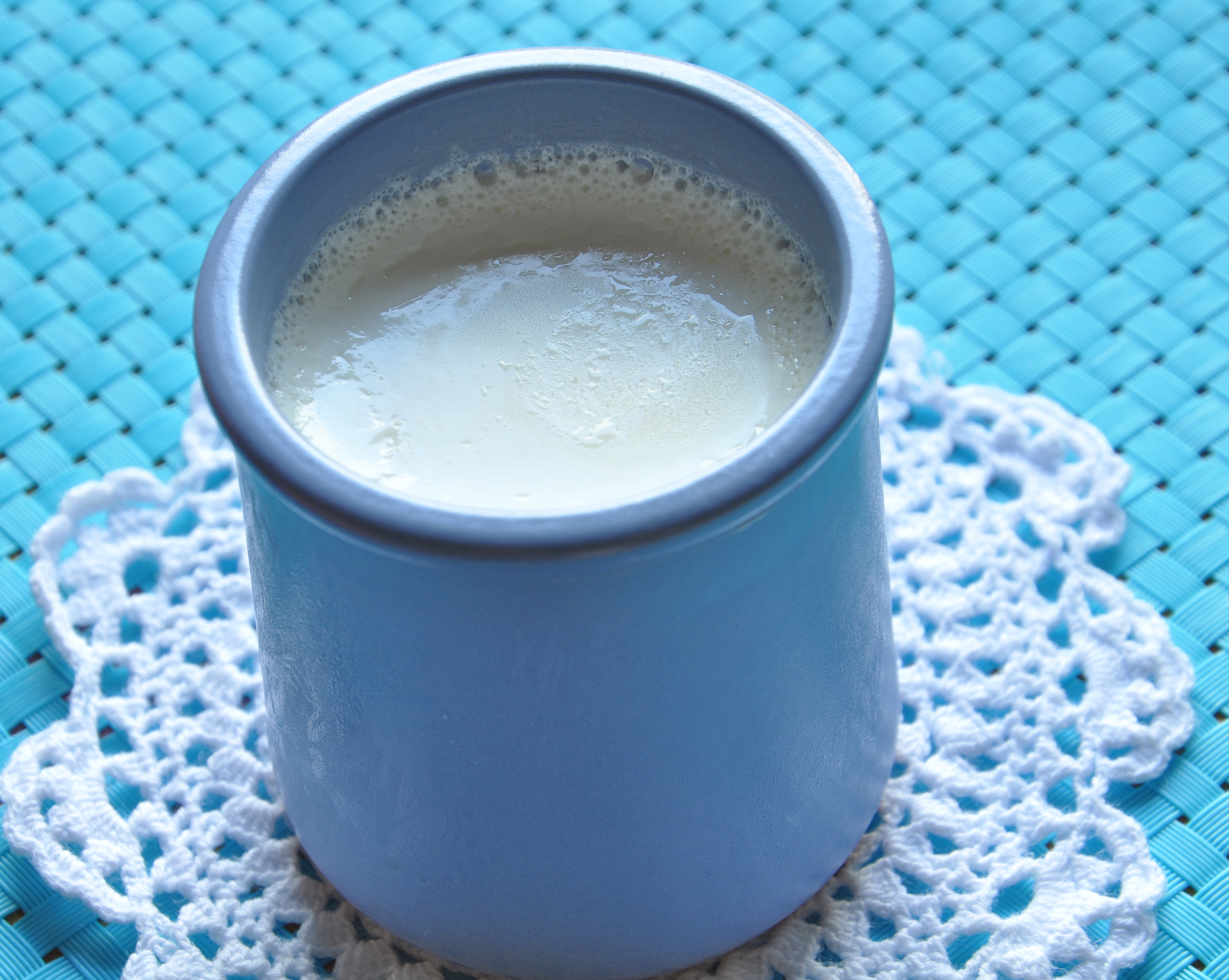
These earthenware yogurt pots I collected from store-bought yogurt which you can see I used in the yogurt maker, great for individual servings.
The end result is a creamy textured yogurt with a slight tart taste. Enjoy plain or sweetened with honey or pure maple syrup. Chopped fresh fruits and nuts can be sprinkled over the yogurt before serving… the choice is yours!
- Using an electric yogurt maker assures me that the milk is fermenting at the correct temperature constantly for the specified amount of time.
- Yogurt with live cultures has intestinal health benefits.
- Yogurt has many culinary uses, marinades, frozen yogurt, dressings, desserts, baking and drinks to name some.
- By making my own yogurt I have less plastic containers to throw out so I guess the environment gets a little help.
Honey from Yemen, Ekhlas dates from our own garden and fresh home-made yogurt… this has to be food heaven… now I wonder if I could squeeze a Jersey Cow into my back yard… !
Still have some more experimenting to do… more yogurt and cheese! If you make your own yogurt let me know how it went for you! Maybe you have some great tips or a recipe that you can share!




You must be logged in to post a comment.