baking · food + drink · posts

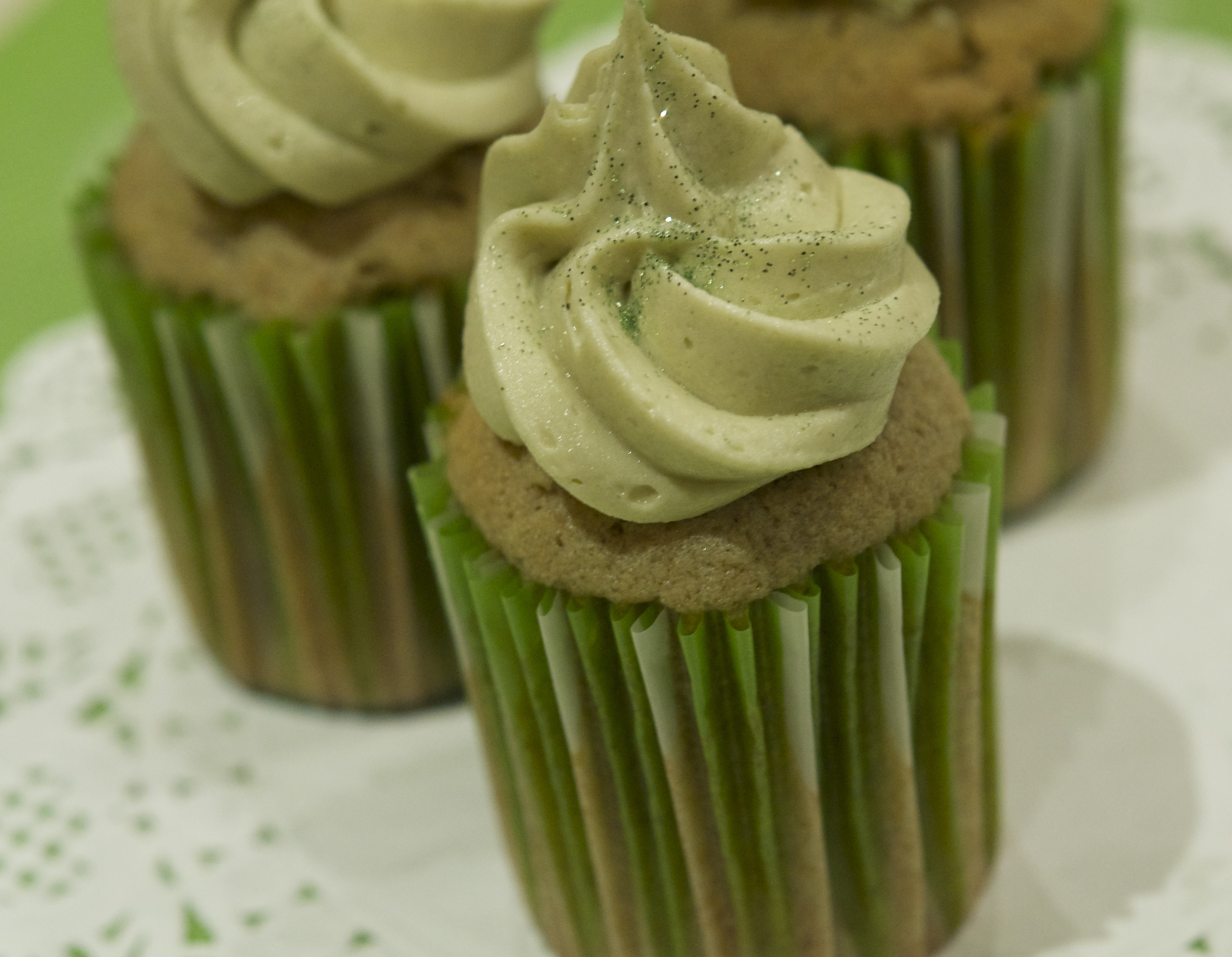
matcha tea and lemon cupcakes frosted with a matcha tea buttercream

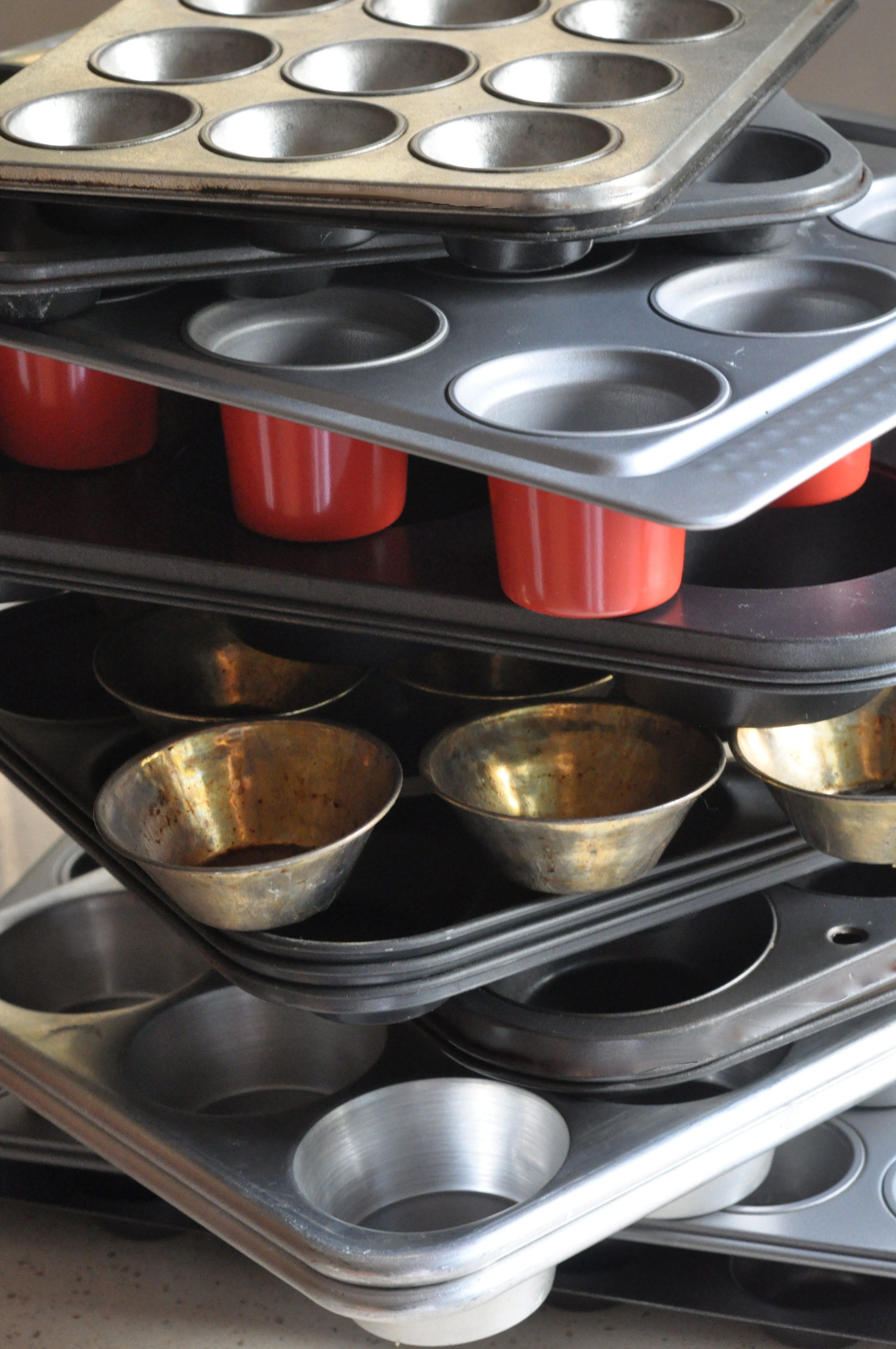
The Sweet Adventures Blog hop theme this month is “What’s your cup of Tea,” and hosted by 84th and 3rd.  A perfect opportunity  to use my new muffin tin which I bought on a recent trip! Why buy another cupcake or muffin tin when I already have so many? Well, the shape caught my eye!  Baked muffins and cupcakes in this cake tin take on a different appearance, tall and narrow  with some having domed shaped tops depending on the recipe being used! What ever way they come out they all look really cute!
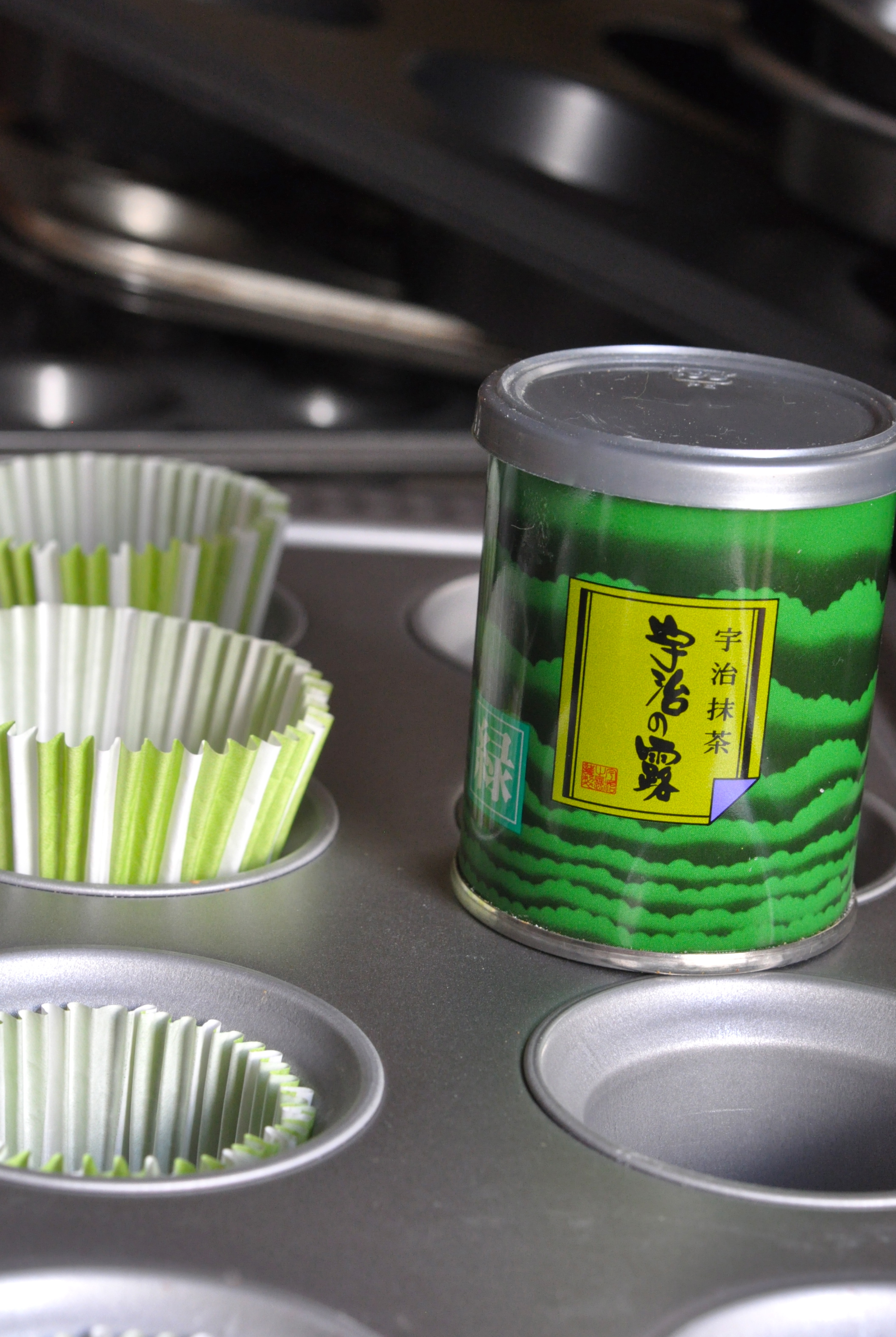
 With some lime green cupcake liners (also my new muffin pan), matcha tea in the cupboard and lemons in the fridge, it was decided… matcha tea with lemon cupcakes! Matcha tea is a high quality Japanese green tea which has many health benefits,  guess using this in the cupcake recipe is a good thing…  might just think these cupcakes are really good for my health… right!

My matcha tea probably could have been fresher,  it had been already opened for a few months and the powder was not as green as when first opened, guess I will have to stock up again and use the older matcha tea for this face mask!  Usually I buy matcha tea from Asian supermarket which is beside the Oriental supermarket, both opposite the Central Market for those living in Bahrain.
Matcha Tea and Lemon Cupcakes with a Matcha Tea Buttercream Topping

Ingredients:

  • 110g salted butter, softened
  • 110g caster sugar
  • zest of one lemon rind
  • 1 teaspoon of matcha tea
  • 2 eggs, lightly beaten together
  • 75g all-purpose flour
  • 25g self-raising flour
  • 1 heaped tablespoon of home-made full-fat plain yogurt or shop bought

for the matcha tea buttercream:

  • 25g cream cheese, softened
  • 50g unsalted butter, softened
  • 200g icing sugar (a little more if needed)
  • 2 teaspoons, whipping or single cream
  • 1/4 teaspoon match tea
  • green edible glitter dust (optional)
You will need a 12 hole cupcake tin lined with 12 cupcake liners
Note: These cupcakes have a light flavour of matcha tea (I am not the green tea drinker in the house), but you can increase the flavour (and colour) by adding another 1/4 teaspoon of matcha tea into the buttercream frosting.

Useful Kitchen Jewellery:                    

  • cupcake pan
  • measuring spoons
  • mixing bowls
  • spatulas
  • electric whisk
  • sieve
  • microplane zester
  • wire cooling rack
  • piping bag and nozzle
  • kitchen scales

How to make:

Pre-heat the oven to 180°C/350°F/Gas 4/Fan 160°C.

Add the butter, caster sugar and lemon zest into a mixing bowl. Sieve in the matcha tea. Using and electric mixer, beat ingredients together until light and fluffy.

Add the beaten eggs (a few tablespoons at a time) to the cake mixture, beating well after each addition.

Sift in the flours and fold into cake mixture with a spatula until the cake mixture is smooth, stir in the yogurt.

Bake cupcakes for about 18 to 20 minutes or until  middle of cupcake springs back when lightly pressed with fingers.

Let the cupcakes sit in the baking pan for a few minutes before transferring to a wire cooling rack.

For the buttercream frosting:

Add the cream cheese and butter to a mixing bowl, beat  together with an electric mixer until soft and smooth.

Gradually sift in the icing sugar and beat until all the icing sugar is incorporated.

In a small bowl mix the cream and matcha tea to a paste and then beat this into the buttercream.

Spoon the matcha buttercream into a piping bag fitted with a rosette nozzle,  pipe a small swirl on top of each cupcake. Dust lightly with edible glitter dust, if desired .
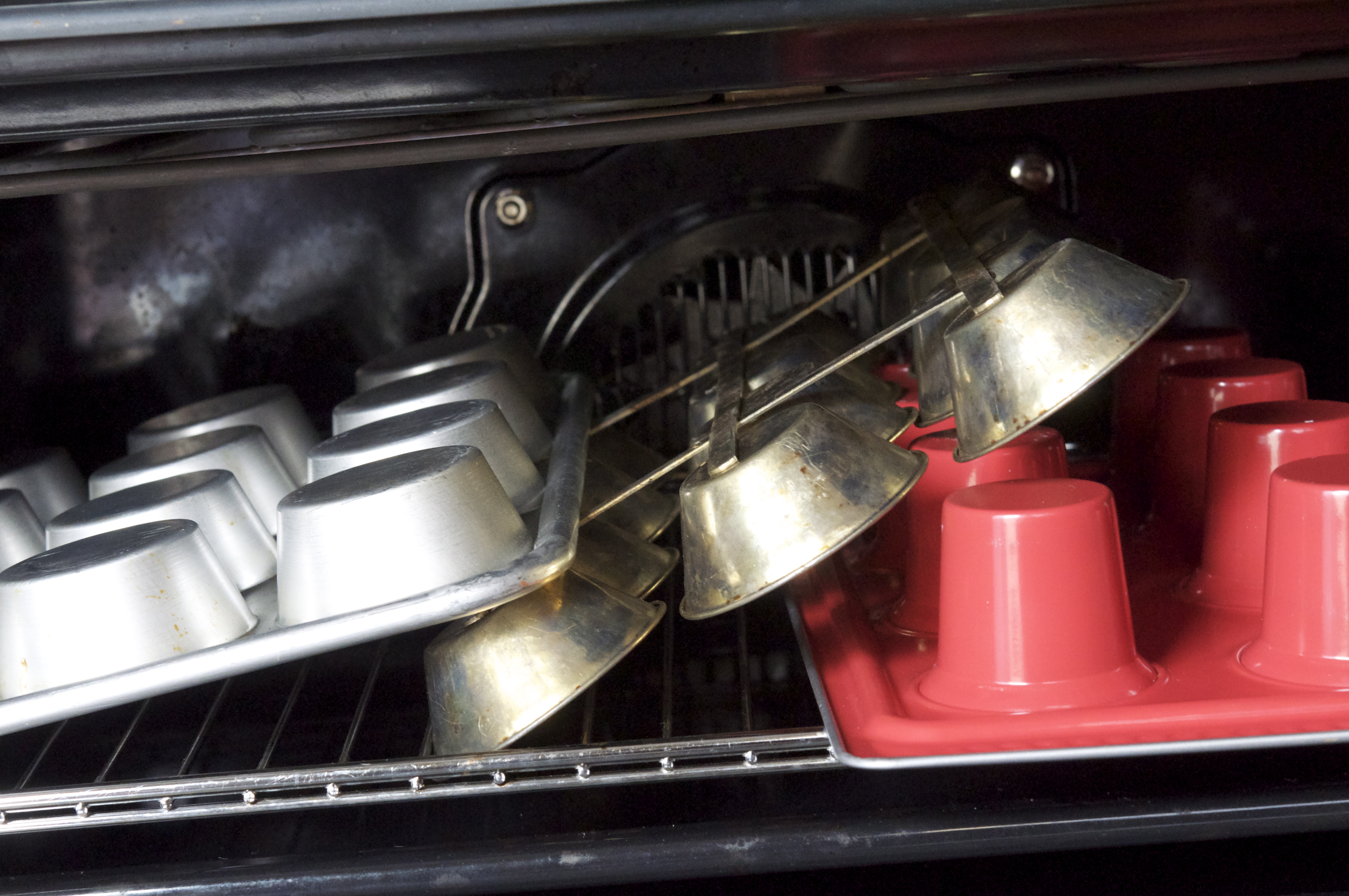
 Tip: Dry your washed baking tins up-side down in the residual heat from the oven after baking, Mum used to always do this!  The heat will dry your pans completely and stop rust forming on some pans.

This post is part of the Sweet Adventures Australian Blog Hop, “What’s your cup of Tea,” click here to see all the other entries!

Keep a lookout for more cupcakes and muffins using this baking tin!
posts

A Cheese making day at Corleggy

A Cheese making day at Corleggy coincided with my recent visit to Ireland. Having tried making soft cheese before (ricotta and fromage blanc), was keen to learn the process of maturing hard cheese using raw milk. Guided by a professional with a passion for cheese making was a chance not to be missed, allowing me a little insight into the art of cheese making. An enjoyable experience and a great way to spend a day outdoors.

The class was run by Silke Croppe an Artisan Cheese Maker recognized throughout Ireland for her handmade goats, cows and sheep’s cheese using raw milk. Silke is originally from Germany but moved to Ireland many years ago to live in Corleggy, Belturbet Co. Cavan where her passion for cheese making began.

The cheese making class was held outdoors on her charming farmhouse cottage nestled in the Belturbet countryside. The weather was on our side and luckily, no rain fell from the Irish skies… but it was cold! Silke and her team had a lovely log fire burning, keeping us warm throughout the day.

Breakfast was served before commencing the cheese making class and it gave us all time to introduce ourselves and have a chat.

A brief summary of the cheese making (in a bucket) process that Silke guided us through.

Fresh raw cow’s milk had already been collected early that morning from a nearby registered dairy into a large vat and mixed with a live culture (starter) to ripen the milk.

Everyone collected 10 liters of the raw cows milk into a sterilized container or bucket.

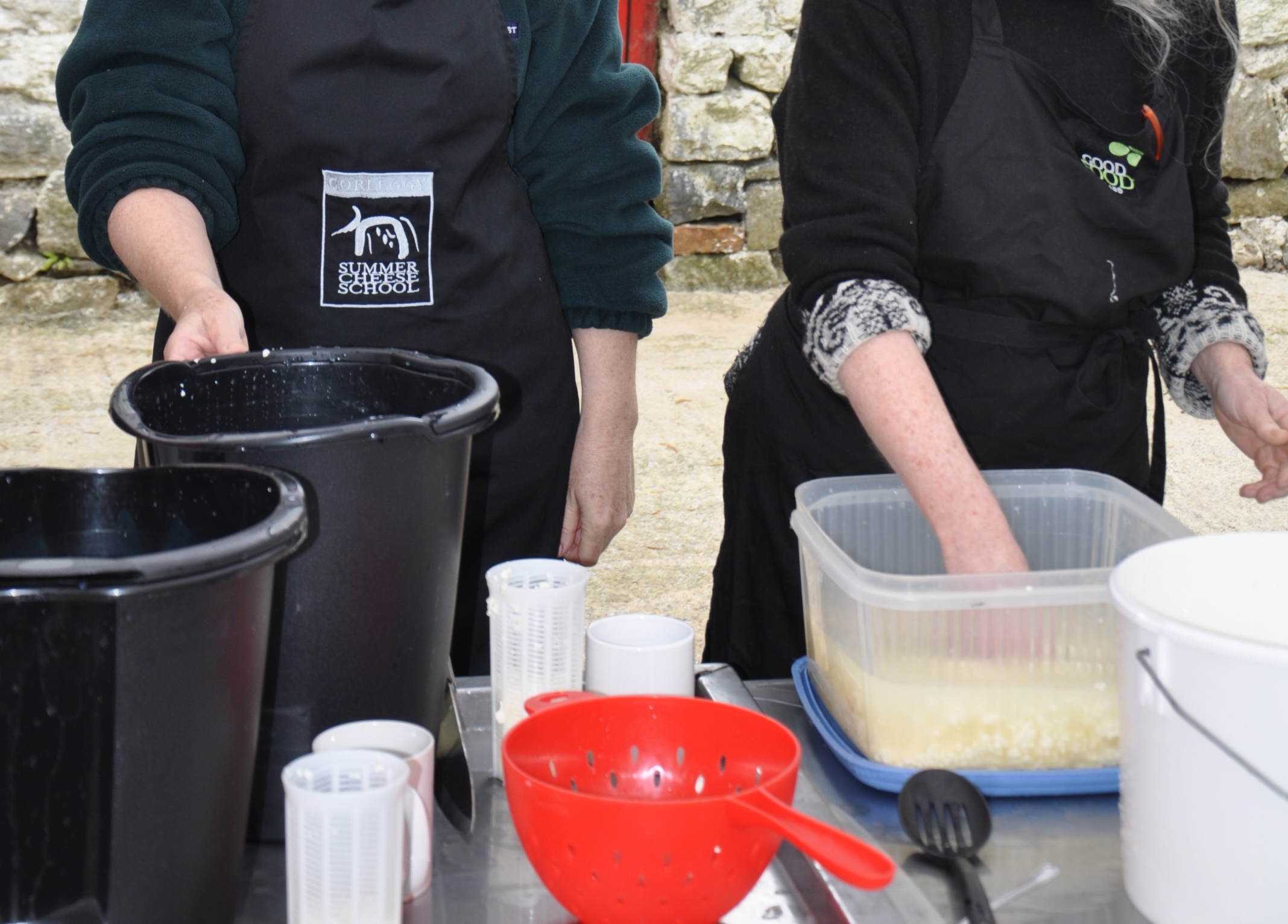
 Liquid rennet was stirred into the bucket of milk which was then left undisturbed for about 20 minutes until the milk set forming a large curd. Using a long knife the curd was carefully cut into smaller curds, this helped separate the watery whey from the curds. The curds were then gently stirred in the whey with clean hands while slowly adding some hot water until the curds reached a temperature of 39°C. During this process the curds became smaller and firmer.

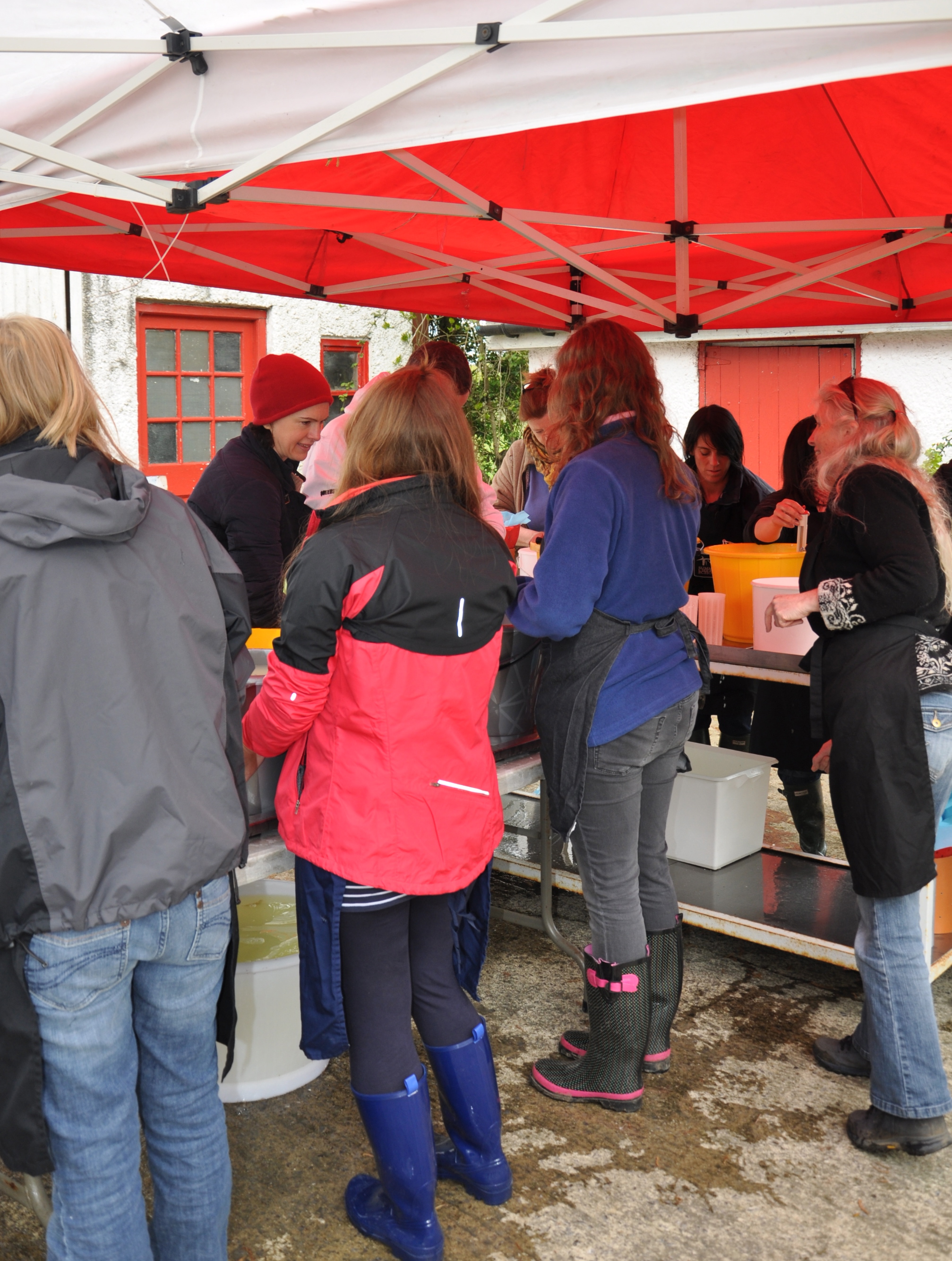
Everyone busy stirring, adding hot water and emptying the excess whey until the curds reach the correct temperature.

Some of the curds were placed into a small cheese mould, this was left to drain for a couple of hours forming a soft cheese.

The rest of the drained curds and the cheesecloth were placed inside a larger cheese mould with holes at the sides which allowed further draining of the whey.

Each cheese mould was covered with a follower and pressure applied to the curds for a few hours, extracting more whey and shaping the cheese.

Time for a break…  a delicious lunch was served,  roast pork, some salads, cheese and wine were on offer. Coffee and some sweet treats were also provided!

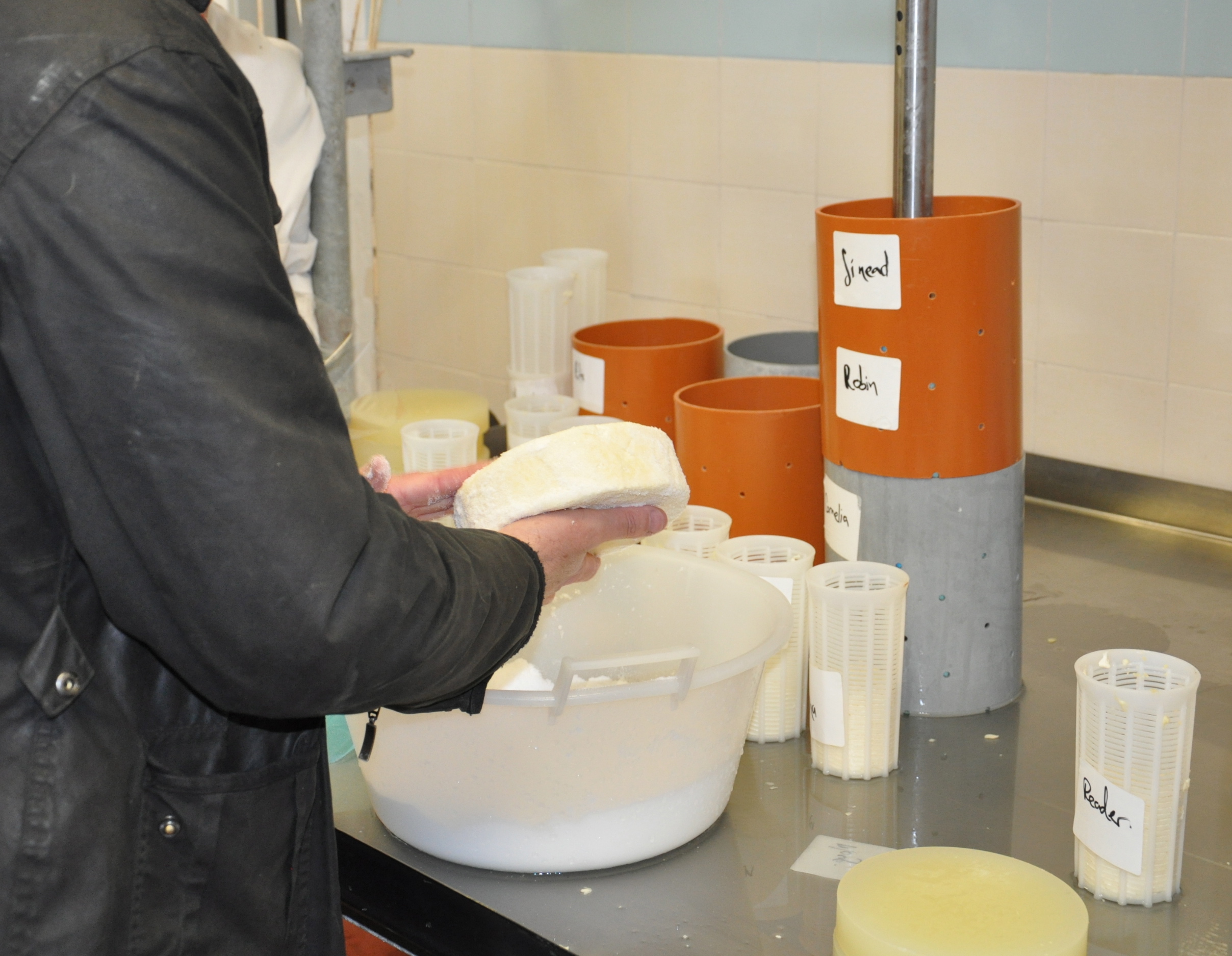
After a few hours the cheese was removed from the press and the exterior of the cheese rubbed liberally with salt, this will help form a rind on the cheese.

The soft cheese (which is still in the white mould) only needed removing from the mould, ready to eat (or stored for about a week) and no further maturing was needed.

Our 1kilo of cheese is wrapped in cheesecloth to take home, ready for maturing into a hard cheese… over a three-month period! Maturing cheese can be a timely process and in the early stages the cheese will need to be turned daily for a couple of weeks and then every now and then until the cheese is mature. Ideal temperatures for maturing cheese are 10°C to 14°C and consistency is important… a wine cooler at home can come in handy!

Our day ended with a selection of Silkes wonderful handmade raw milk cheeses to sample before heading home.

As I was travelling back to Bahrain the following day I decided to leave my cheese with my brother, maturing alongside his cheese in his wine cooler. Up-dates have been promised (with a photo) and maybe I might just be back in Ireland to taste the cheese when it is fully matured…  in three months time.

food + drink

Irish Potato Bread

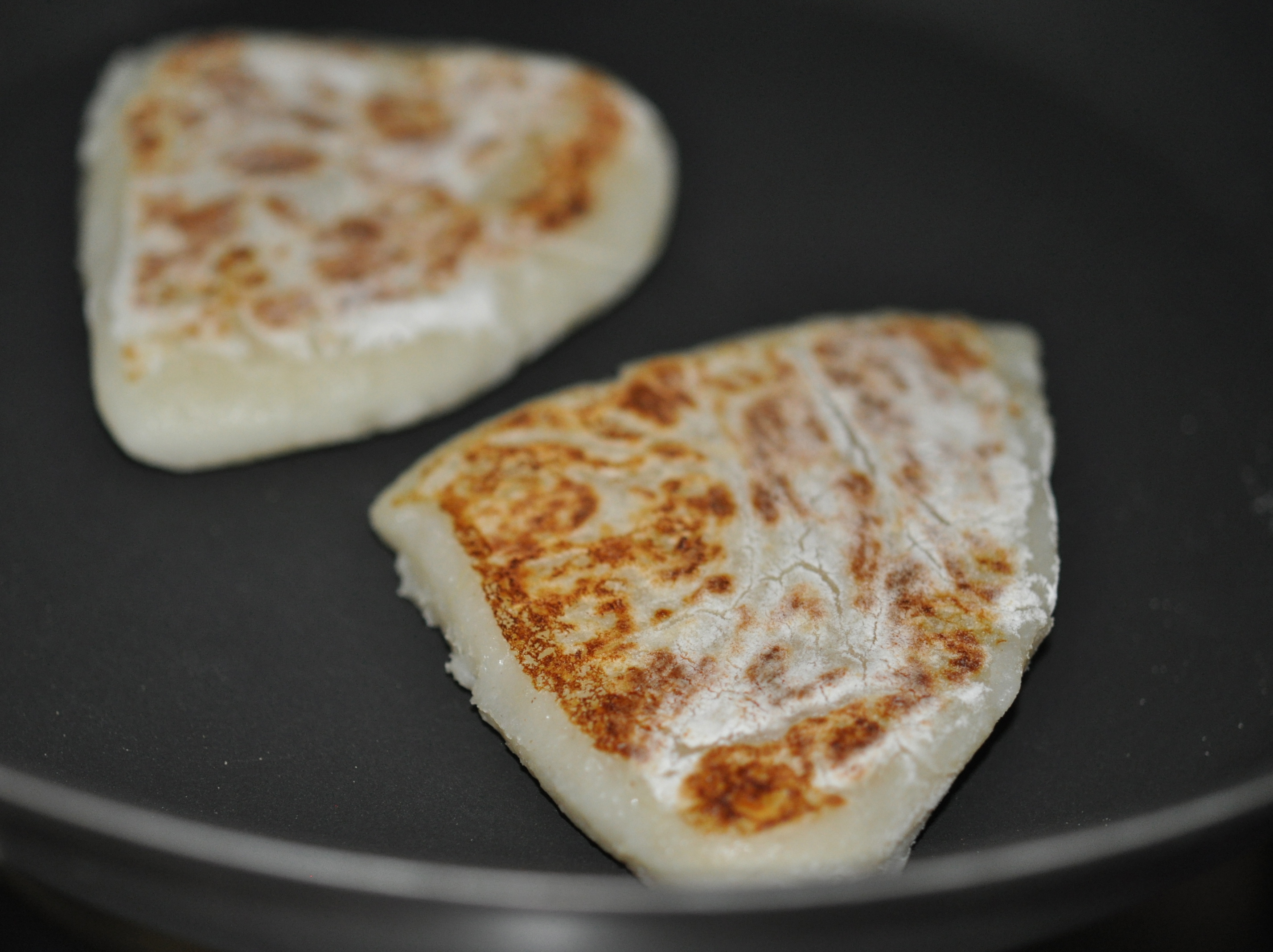
Back in Ireland for a couple of weeks to attend my nieces confirmation and intend on taking the opportunity to indulge in some Irish foods, the humble potato ranks high on the list.  Potato bread was a great childhood favourite of mine and still is to this day.  As a child my father always made the potato bread in our house, he was a great man for the frying pan and potato bread was one of his specialities. Fond memories of us all sitting around the kitchen table, eagerly waiting for a hot triangle of potato bread to land on our warmed plate. Then brushing some melted butter over the slightly charred crust with a soft moist interior…  t’was pure Irish heaven on a plate.

Potato bread is sometimes called potato farls but in our house it was always Dad’s Potato Bread. There was no written recipe or exact weighing of ingredients followed when Dad made the potato dough and when incorporating flour into the mashed potatoes he would stop when the dough felt just right. You can use leftover mashed potatoes but Dad would boil a few potatoes specially for making potato bread, he felt that using cold leftover mash was never the same.

Does the type of potato matter? Floury potatoes are the best choice and using waxy potatoes (which we have plenty of in Bahrain) will not achieve good results for making potato bread. Floury potatoes contain less moisture and have a higher starch content, resulting in a dry fluffy mash. Waxy potatoes contain more moisture and less starch resulting in a more gloopy type of mash. Some of the larger supermarkets in Bahrain sell some floury potatoes  (Russets) but they are much more expensive to buy.

Irish Potato Bread

Ingredients:

  • 2 large potatoes, peeled and cut into thirds (approx. 450g)
  • knob of butter, melted
  • salt to taste
  • plain flour, sieved (approx. 110g)

Useful Kitchen Jewellery:

  • vegetable peeler
  • steamer
  • food mill or potato masher
  • cast iron griddle or non-stick frying pan

How to make:

Steam the potatoes using some salted water for about 15 to 20 minutes until cooked through, the tip of a sharp knife should easily pass through the potato.

Pass the potatoes through a food mill placed over a mixing bowl, mix in the melted butter and salt. Check seasoning. If you do not have a food mill mash the potatoes using a potato masher.

Gradually work in the flour in small increments using a wooden spoon to start with but towards the end use your hands to mix in the flour, so you get the “feel” of the dough. The finished dough should be a little tacky but workable. Note that all the flour may not be needed, but you could also find that a little extra is needed!

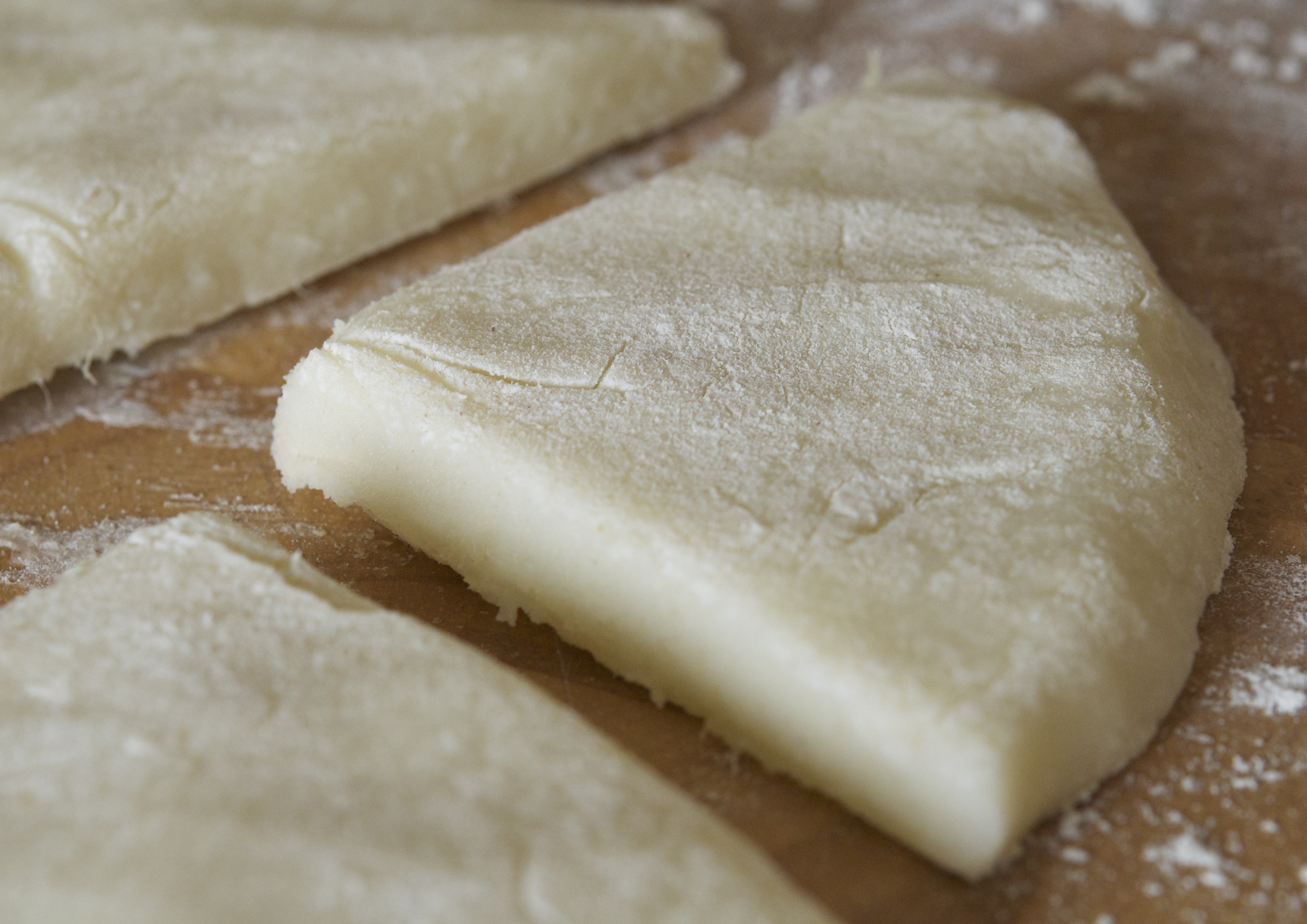
Place the dough (usually I cut in half) on a lightly floured surface and with floured hands flatten the dough into a circle about 1cm thick. Cut the dough into triangles using a knife dusted with some flour.

Heat a un-greased iron griddle pan (sprinkled with a little flour to prevent sticking) or non stick frying pan on medium until hot and cook the potato bread until each side has formed a hint of a crust with a browned and lightly charred look. 

Serve the potato bread immediately on warmed plates and brush each slice with a little melted butter.

Serving suggestions: Enjoy potato bread on its own or topped with a fried or poached egg. Also great served with some grilled sausages, tomatoes and bacon.