food + drink · posts · store cupboard

doughnut peach conserve

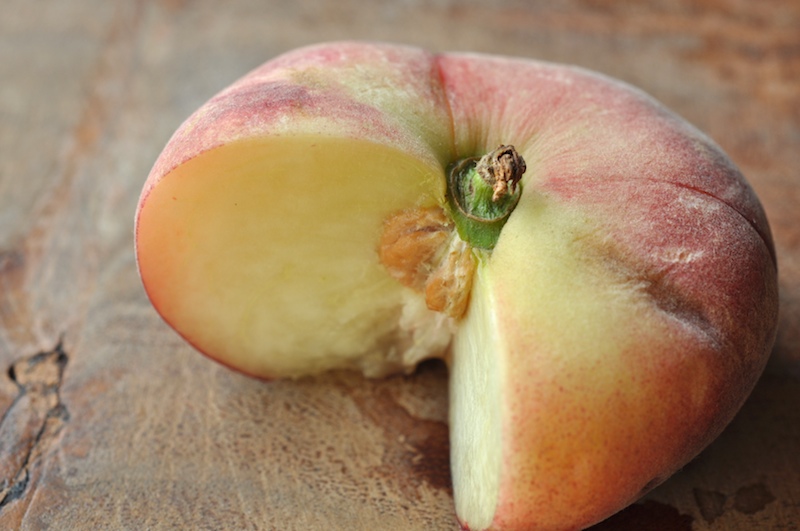
A miscommunication and two food shoppers meant a glut of doughnut peaches over filled our fruit bowls. I absolutely love eating these doughnut shaped peaches… to me they are little flattened pillows of sweetness with a wonderful peachy perfume. If you need a sweet fix… eat one of these doughnut peaches but you might find it is hard to stop at one. Less fuzzy skinned than other varieties of peach, the is flesh pale, sweet, juicy and low on acidity. Because of their shape, these peaches are also called Saturn or even UFO’s.

With a big bowl full of peaches sitting in front of me I thought to make a homely jar of chunky conserve,  the urge to start  skinning some peaches came upon me!
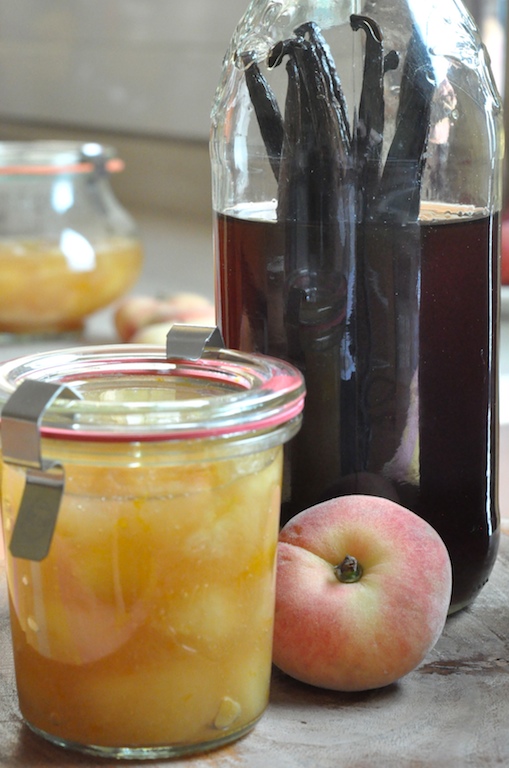
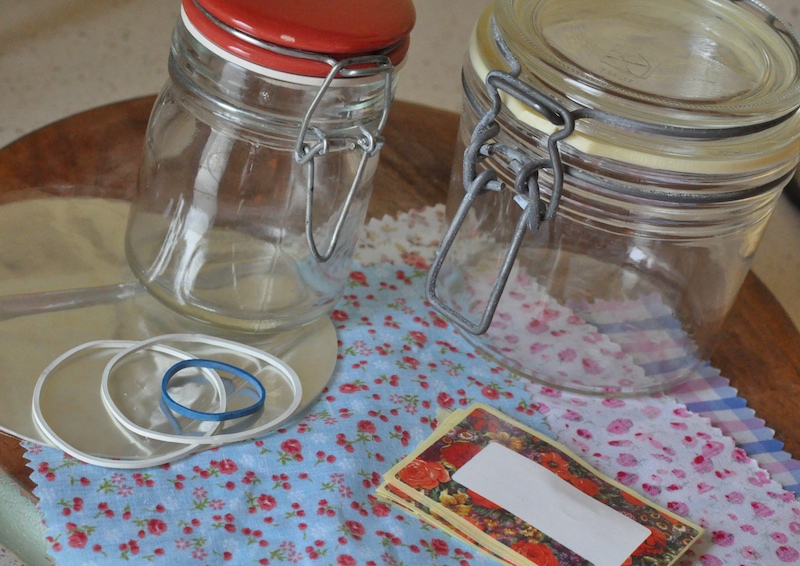
With a big bowlful of peaches sitting in front of me I decided to make a jar of chunky conserve. Making home-made conserve or jam is not something I do on a regular basis so using ordinary household utensils for the process suits fine. My mother made jam on many occasions with no fancy equipment and I have vivid memories of the big bubbling pot and the wonderful smell of jam filling our kitchen. The chilled saucers in the freezer ready and waiting for the wrinkle test. All the saved glass jars lined up on the kitchen table waiting to be filled with the hot sticky jam. Pressing circles of waxed paper over the surface (this is where I would help) of the jam, then covering the top of the jar with cellophane and securing with thick brown elastic bands. Once the jam had cooled a flick test with the fingers would be preformed on the cellophane covers, confirming the covers were taut and a proper seal had taken place.
Conserves contain bigger and more whole pieces of fruit than jams, both contain lots of sugar which acts as a preservative, enabling long storage of home-made conserves and jams without the need for refrigeration. As I am not interested in storing jam for months on end in a cupboard, making preserves with a high ratio of fruit and less sugar is my preference… hence this home-made conserve needs to be refrigerated and consumed within three to four weeks… no problem there! A delicious tasting peachy conserve, flavored with orange and a hint of clove… with a lovely spoonable consistency.

Doughnut Peach Conserve

Ingredients:

  • 500g doughnut peaches (choose firm fruit)
  • zest one small orange, afterwards segment the orange taking care not to include any pith or membrane
  • 225g granulated sugar
  • 2 tablespoons lemon juice (preserves the colour of the fruit and increases the pectin content)
  • 3 whole cloves
  • 1/4 teaspoon of home-made vanilla extract, or store-bought

You will need: One 450ml jar with a lid or use a few smaller volume jars, which will need to be sterilized! Some waxed or silicon paper cut into circles to fit the appropriate jars!

Removing the skin from peaches: Bring a large saucepan of water to a boil. Also fill a large bowl with cold water and throw in some ice cubes. Cut a shallow cross (only into the skin) on the base of each peach with a sharp knife. Place the peaches into the boiling water for about 20 seconds. With the help of a slotted spoon, transfer the peaches quickly into the cold water bath (stops the peaches from cooking) for about 30 seconds. Remove and skin the peaches. Unfortunately all the lovely colour disappears with the skins and the peaches will look somewhat insipid!

This next step is completely optional but wanting to put a bit of blush back into the conserve I gathered the skins of the peaches and gave them a good squeeze over a bowl, collecting about a tablespoon and a half of pinkish coloured liquid (with a bit of flavour)  which I incorporate when making the conserve!
How to make:

Cut each peach into quarters and discard the stone. Cut the orange segments into small pieces.

Add the peaches, juice from the skins (if using) orange zest, orange segments, sugar, lemon juice and cloves into a wide low sided thick-bottomed stainless steel saucepan. Gently mix everything together and let the contents stand undisturbed for about 15 minutes, this process helps extract the juice and also firms up the pieces of fruit enabling chunks of fruit to remain whole in the cooked conserve.

Heat the contents of the saucepan gently while stirring with a wooden spoon until the sugar has completely dissolved. Raise the heat and cook steadily (not a rolling boil) until  the fruit is soft and setting point (see note below) has been reached. Take care that the jam does not catch on the bottom of the saucepan and burn! This will take around 20 minutes.  Remove from heat and allow the conserve to cool for about 10 minutes, stir in the vanilla extract, remove and discard the cloves.

Spoon the peach conserve into a hot sterilized jar.  Press a circle of waxed or silicon paper onto the surface of the conserve and cover with lids.  Store the completely cooled jar in the refrigerator.

How to know when your preserve has reached setting point: Usually I follow the wrinkle test when making a conserve or jam. Spoon a teaspoon of the boiling conserve onto one of the cold saucers from the freezer, let sit for about a minute until cold, then push with your finger… if the preserve wrinkles it has reached setting point, if not, boil for a couple of minutes and test again.

Wonderful delicious ways to use and enjoy Doughnut Peach Conserve:

  • Mix a spoonful of peach conserve thorough a pot of home-made natural yogurt or store-bought, makes a delicious real fruit flavoured yogurt.
  • Place a small chunk of creamy blue cheese or soft goats cheese on a cracker and top with a little blob of peach conserve… I love this combination!
  • Serve the peach conserve as an accompaniment to pan cooked duck breast for a quick fruit sauce.
  • For a quick fruit topping, spoon some peach conserve over plain cheese cake or some vanilla  ice cream.
  • Peach conserve served with warmed croissants, scones, a nice chunk of home-made brown bread or french toast… simple but all delicious!
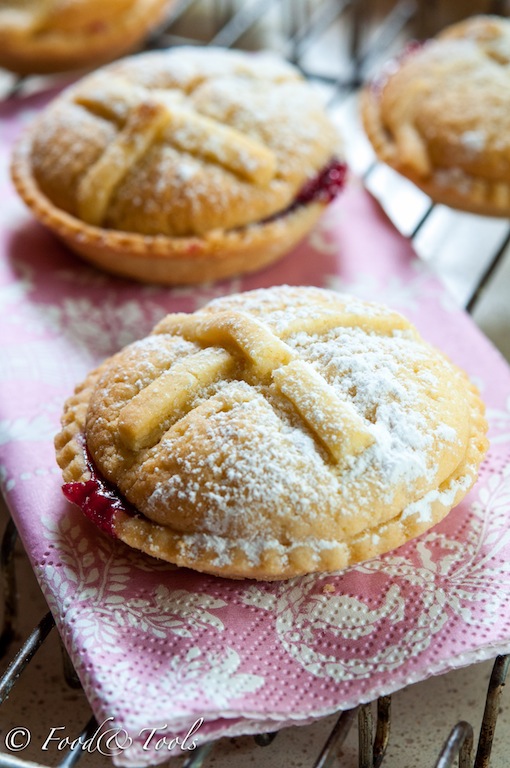
  • Replace the blackcurrant jam with peach conserve in this Welsh Cheese Cakes recipe.
What is your favourite flavour of conserve or jam? 
baking · food + drink · posts

Welsh Cheese Cakes

welsh cheesecakes-2

When the theme “Sweet as Pie” was announced for this months Sweet Adventures Blog Hop hosted by KC of the Capers of a Kitchen Crusader… apple pie came to mind. Warm apple pie with a dollop of fresh cream… delicious!  But after giving the theme some more thought I started thinking back to my school days… my favourite subject… home economics.

I remembered these  “little jam pie cakes” baked during one of the cooking lessons but I couldn’t remember what they were actual called. They were a cross between a pie and a cake with a jam filling.  But I do remember that I loved baking them and did so on many occasions during those years.

Update: 2015 🙂 Happy to announce that my sweet as pie Welsh cheese cake photograph is published in the new edition of Essentials of Living text book for Irish Students.

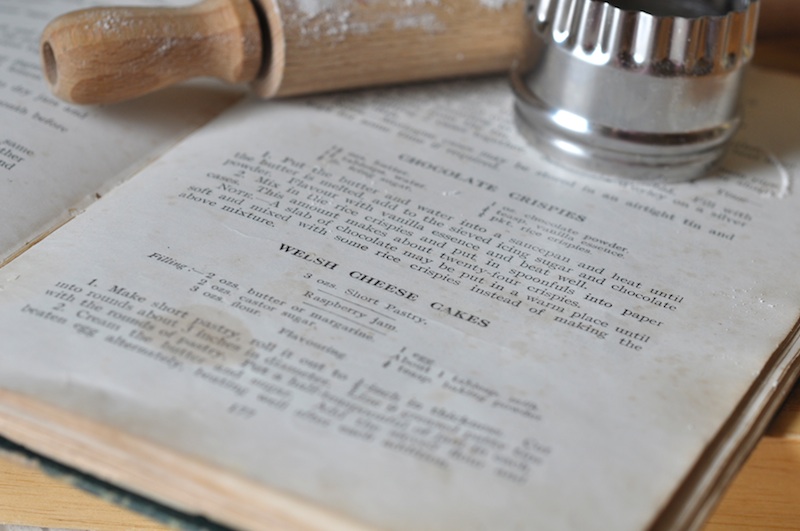
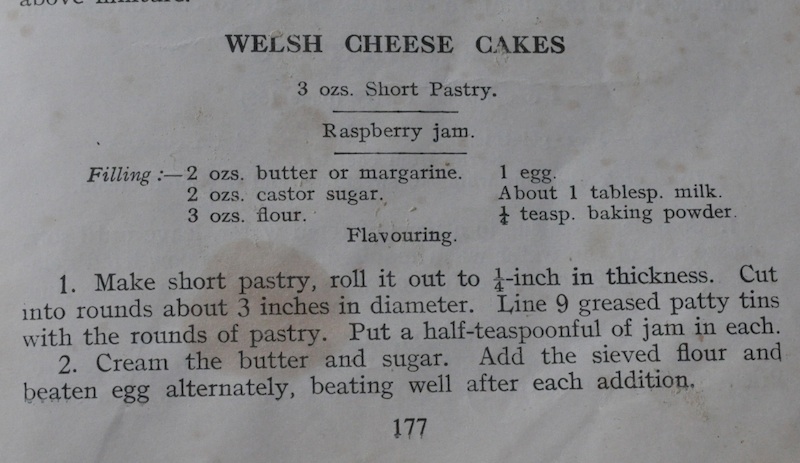
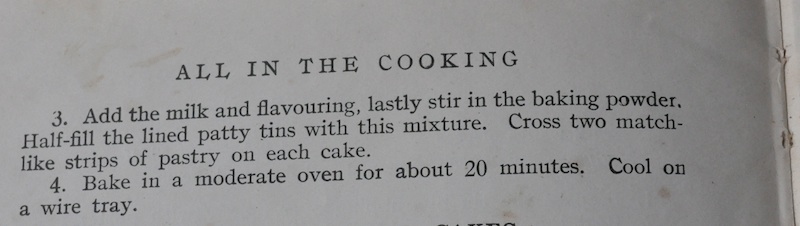
Not so long ago I acquired two old Irish cookery books called   “All In The Cooking” from my mother (no way were these gems going in the bin)  which Mum had used during her teacher training days at college. The cookery books were official text books compiled for students and classes of Domestic Science in Ireland and printed during the 1940’s and 50’s.  Flicking through the old yellowed pages and scouring over the recipes, came across what I was looking for… these little jam pie cakes were called “Welsh Cheese Cakes.” Maybe our domestic science teacher called them something different. Why they are called cheesecakes… I have no idea and there is no cheese in them either!  But the theme for the blog hop is pies… pastry on the bottom and pastry on the top… well these Welsh Cheese Cakes fit the bill.

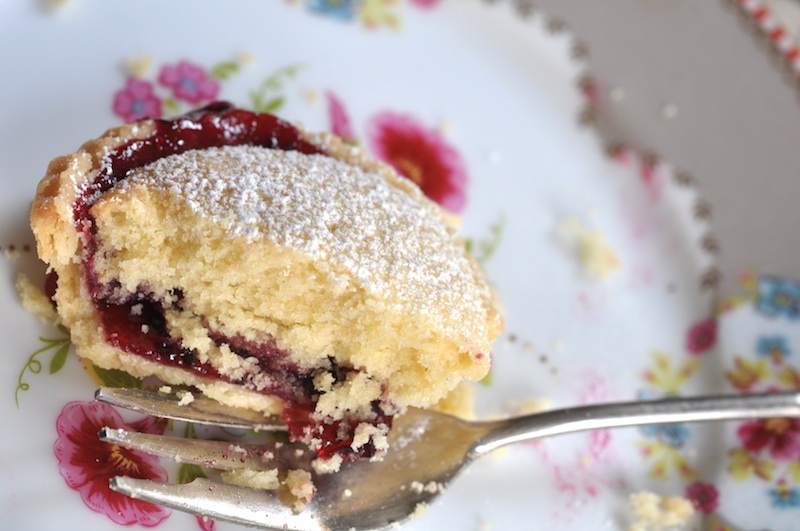
This is the first time I have baked this old school recipe for my family and once the camera was set aside (although I got the first bite), the cakes were eaten and the family  statement was “why have you never made these before”… home baking at its best!

Some notes: As I used a 12 hole patty tin more pastry was required, the pastry weight stated in the orignal recipe seemed on the low side anyway! Rolling the pastry into 1/4 inch thickness was a bit on the chunky side for me so I went for about 1/8 inch thickness, a little more delicate! Using a home-made sweetened short crust pastry was also a preference, but when buying  short crust pastry from the supermarkets I choose pastry made with butter!

When making the cake filling I used the all- in- one method of cake mixing for this recipe, which is quicker, rather than the creaming method. The cake filling was soft enough when mixed so I omitted the milk and used vanilla extract for the flavouring.

Welsh Cheesecakes
Welsh Cheesecakes

Welsh Cheese Cakes

 (Adapted from the All In The Cooking, see below for original recipe)

Ingredients:

  • 200g short crust pastry (home-made or bought)
  • 2 tablespoons of blackcurrant jam

for the cake filling

  • 50g butter, softened
  • 50g castor sugar
  • 75g all-purpose flour
  • 1/4 teaspoon baking powder
  • 1/4 teaspoon vanilla extract
  • 1 egg
  • icing sugar, for dusting (optional)
Useful Kitchen Jewellery:
  • 12 hole patty tin
  • rolling-pin
  • pastry cutter
  • electric beater
  • kitchen weighing scales

How to make:

Pre-heat the oven to 350°F/180°C/160°C Fan/Gas 4.

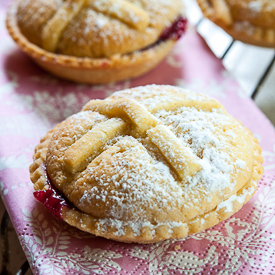
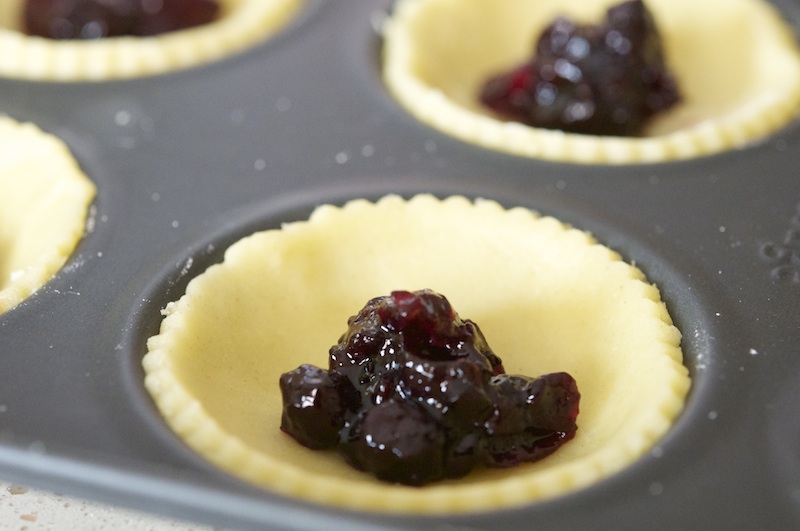
On a lightly floured work-surface roll out the pastry to 1/8 inch thickness. Cut into 12 rounds using a 3-inch round fluted pastry cutter and line the un-greased patty tin with the pastry. Re-roll the scrapes of pastry out into 1/8 inch thickness and cut pastry into thin match-like strips, you will need 2 strips per cake.

Place a 1/2 teaspoon of jam into the middle of each pastry round. Place patty tin into the fridge (especially if the kitchen is very warm) while making the filling.

Put the butter into a medium mixing bowl and sieve in the castor sugar, flour and baking powder. Next add in the vanilla extract and egg.

Beat all the ingredients together using an electric mixer for about 2 minutes or until mixture is smooth and lighter in colour.

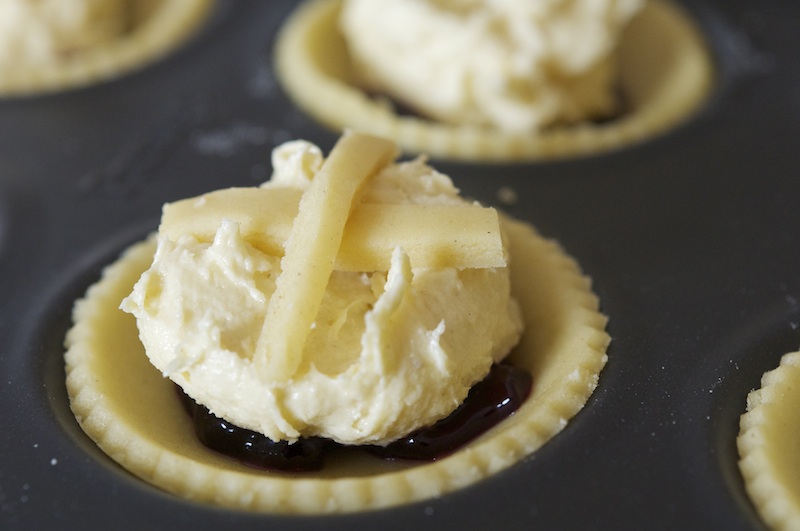
Place 1 heaped teaspoon of cake mixture over the jam, then cross two strips of pastry over the top of the cake mixture.

Bake for about 18 to 20 minutes or until light golden. Leave to cool in the tin for about 5 minutes before transferring to a wire cooling rack. Dust over some icing sugar before serving, if using.

Original Recipe from All In The Cooking 

This post has been part of the “Sweet Adventures Blog Hop, click here to see all the other “Sweet as Pie” entries!

baking · food + drink · posts

matcha tea and lemon cupcakes frosted with a matcha tea buttercream

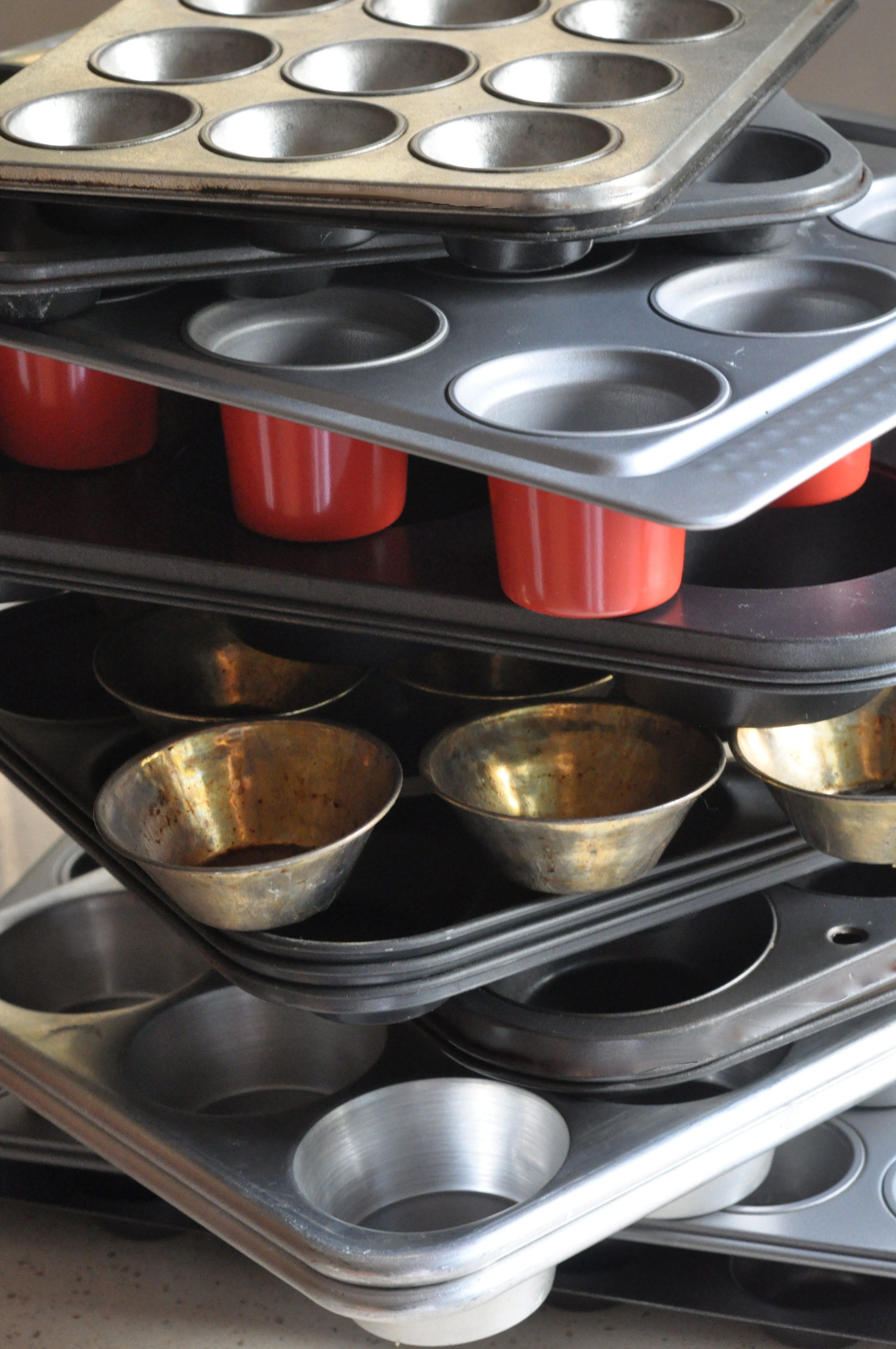
The Sweet Adventures Blog hop theme this month is “What’s your cup of Tea,” and hosted by 84th and 3rd.  A perfect opportunity  to use my new muffin tin which I bought on a recent trip! Why buy another cupcake or muffin tin when I already have so many? Well, the shape caught my eye!  Baked muffins and cupcakes in this cake tin take on a different appearance, tall and narrow  with some having domed shaped tops depending on the recipe being used! What ever way they come out they all look really cute!

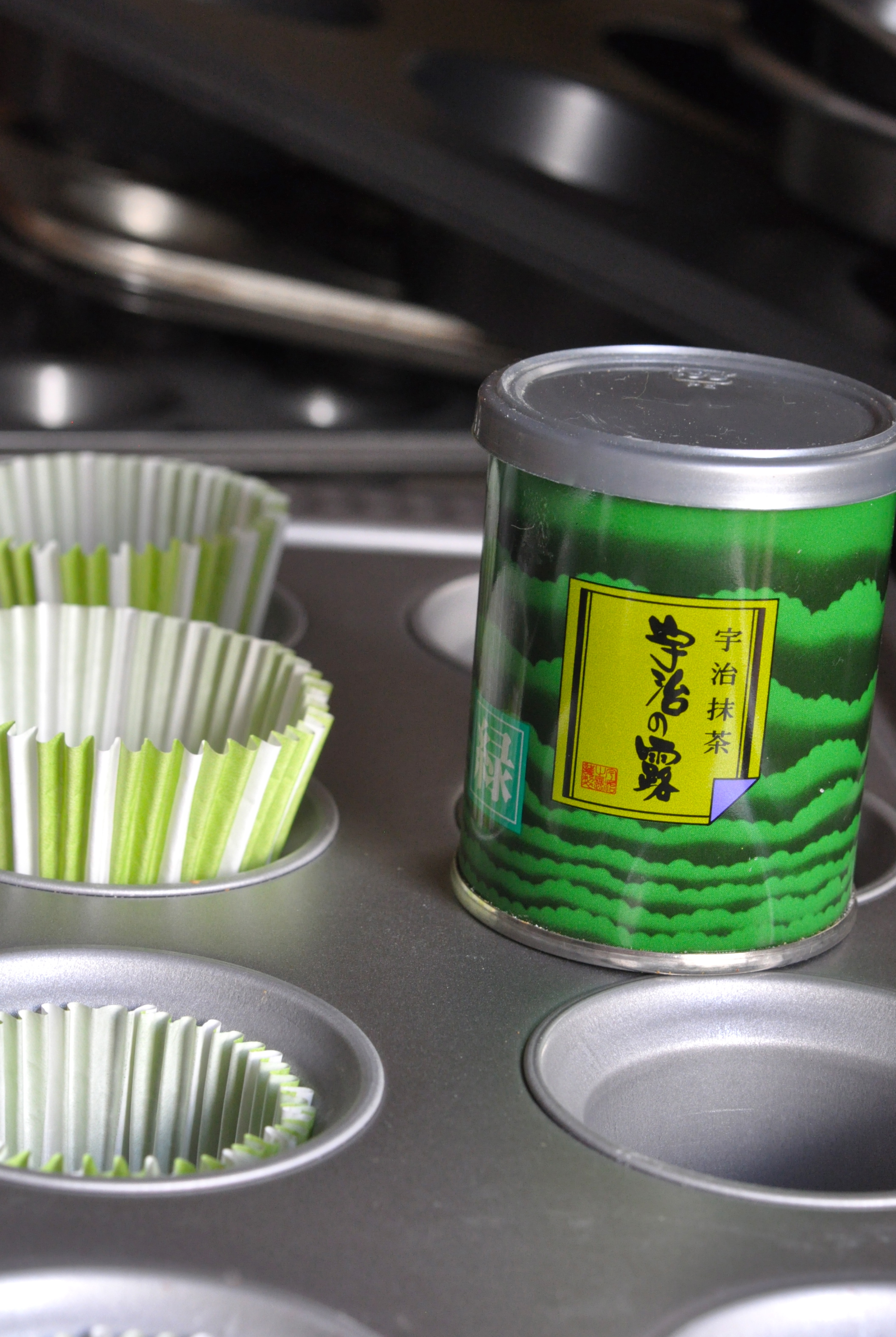
 With some lime green cupcake liners (also my new muffin pan), matcha tea in the cupboard and lemons in the fridge, it was decided… matcha tea with lemon cupcakes! Matcha tea is a high quality Japanese green tea which has many health benefits,  guess using this in the cupcake recipe is a good thing…  might just think these cupcakes are really good for my health… right!

My matcha tea probably could have been fresher,  it had been already opened for a few months and the powder was not as green as when first opened, guess I will have to stock up again and use the older matcha tea for this face mask!  Usually I buy matcha tea from Asian supermarket which is beside the Oriental supermarket, both opposite the Central Market for those living in Bahrain.

Matcha Tea and Lemon Cupcakes with a Matcha Tea Buttercream Topping

Ingredients:

  • 110g salted butter, softened
  • 110g caster sugar
  • zest of one lemon rind
  • 1 teaspoon of matcha tea
  • 2 eggs, lightly beaten together
  • 75g all-purpose flour
  • 25g self-raising flour
  • 1 heaped tablespoon of home-made full-fat plain yogurt or shop bought

for the matcha tea buttercream:

  • 25g cream cheese, softened
  • 50g unsalted butter, softened
  • 200g icing sugar (a little more if needed)
  • 2 teaspoons, whipping or single cream
  • 1/4 teaspoon match tea
  • green edible glitter dust (optional)
You will need a 12 hole cupcake tin lined with 12 cupcake liners
Note: These cupcakes have a light flavour of matcha tea (I am not the green tea drinker in the house), but you can increase the flavour (and colour) by adding another 1/4 teaspoon of matcha tea into the buttercream frosting.

Useful Kitchen Jewellery:                    

  • cupcake pan
  • measuring spoons
  • mixing bowls
  • spatulas
  • electric whisk
  • sieve
  • microplane zester
  • wire cooling rack
  • piping bag and nozzle
  • kitchen scales

How to make:

Pre-heat the oven to 180°C/350°F/Gas 4/Fan 160°C.

Add the butter, caster sugar and lemon zest into a mixing bowl. Sieve in the matcha tea. Using and electric mixer, beat ingredients together until light and fluffy.

Add the beaten eggs (a few tablespoons at a time) to the cake mixture, beating well after each addition.

Sift in the flours and fold into cake mixture with a spatula until the cake mixture is smooth, stir in the yogurt.

Bake cupcakes for about 18 to 20 minutes or until  middle of cupcake springs back when lightly pressed with fingers.

Let the cupcakes sit in the baking pan for a few minutes before transferring to a wire cooling rack.

For the buttercream frosting:

Add the cream cheese and butter to a mixing bowl, beat  together with an electric mixer until soft and smooth.

Gradually sift in the icing sugar and beat until all the icing sugar is incorporated.

In a small bowl mix the cream and matcha tea to a paste and then beat this into the buttercream.

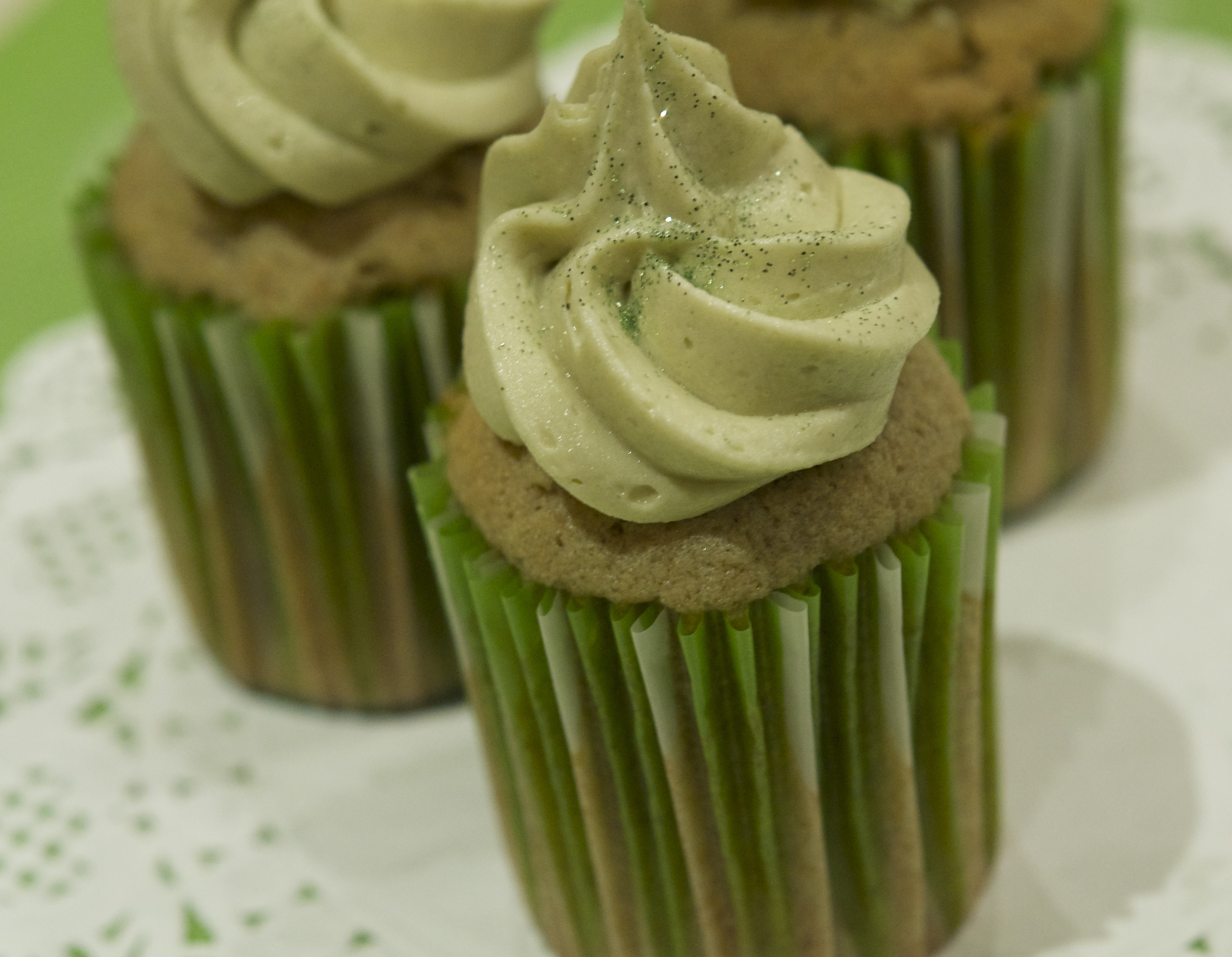
Spoon the matcha buttercream into a piping bag fitted with a rosette nozzle,  pipe a small swirl on top of each cupcake. Dust lightly with edible glitter dust, if desired .

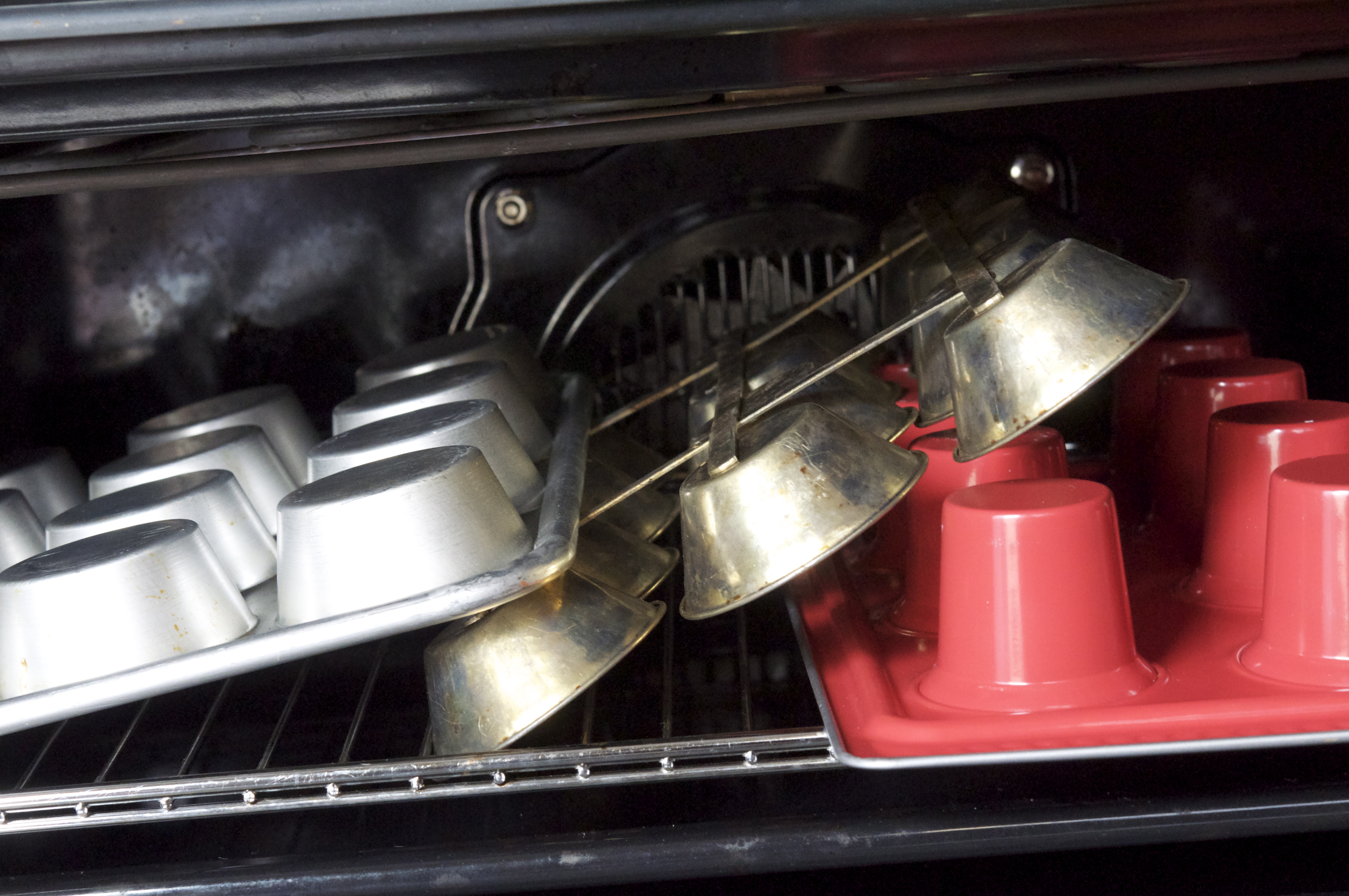
 Tip: Dry your washed baking tins up-side down in the residual heat from the oven after baking, Mum used to always do this!  The heat will dry your pans completely and stop rust forming on some pans.

This post is part of the Sweet Adventures Australian Blog Hop, “What’s your cup of Tea,” click here to see all the other entries!

Keep a lookout for more cupcakes and muffins using this baking tin!