 If you have subscribed to Food and Tools you might be feeling a sense of “Déjà Vu”… I’ve seen this post before! Yes you have! I never knew blog posts could disappear and I have absolutely no idea how that happened. It did bring to my attention that some older posts have some broken links and missing photographs, so it seems I have a little housework to do. Maybe it happened when I switched themes! Thankfully I had most of this post saved… always backup EVERYTHING!
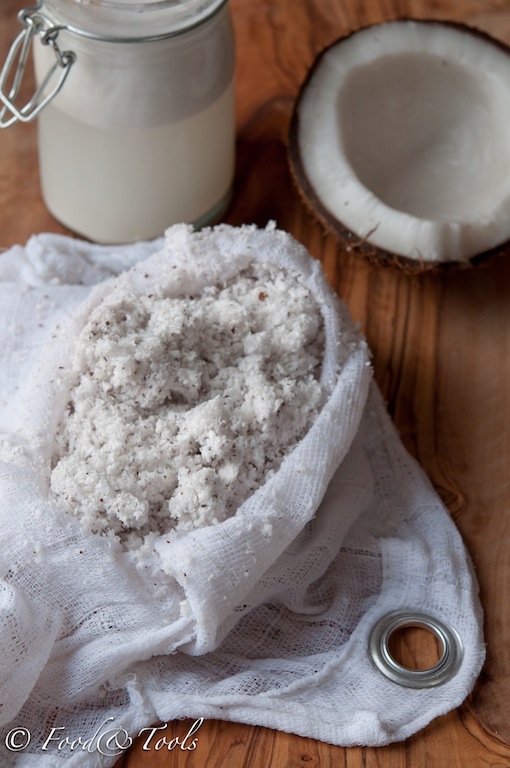
This post was also part of the February photography challenge over at Simone’s blog JungleFrog Cooking and the theme, Homemade… making a homemade recipe from scratch. My first introduction to fresh coconut milk was in Thailand some years back and seeing how easy the process of extracting fresh coconut milk from grated coconut was, encouraged me to make coconut milk at home. It’s so easy to grab a tin of coconut milk (maybe not so easy to find a good quality brand) from the store cupboard, but there is a great sense of culinary pride when you make your own coconut milk… give it a try.
Making delicious creamy coconut milk at home is easy but cracking the hard shell of the coconut might be the most difficult part and result in a few painful mishaps! If you have a supermarket (Lulu and Geant in Riffa) that grates fresh coconut it might be a good idea to avail of this service. Homemade coconut milk means no additives, stabilizers or salt and it’s dairy free. When selecting a coconut, gentle shake and listen for the sound of liquid sloshing around inside, no sound or very little means the coconut has cracks, leakages or old and dried out.
Coconut reminds me of Halloween and as a child I have memories of myself desperately trying to pry the coconut flesh from the shell with a dinner knife, stabbing myself a few times in the process. Placing a coconut (cracked and water drained) in a preheated oven on moderate heat for about 15 minutes helps loosen the coconut flesh, making it easier to pry away from the shell… a tip I could have done with years ago! Although you can complete the process of making coconut milk by hand, some kitchen tools make it easier. To grate the coconut flesh use an electric coconut scraper, the fine side of a grating blade on a food processor or a manual grater. Using a blender to blend the grated coconut flesh with hot water helps extract more of the oils, resulting in a creamier milk with more flavor. You can also soak the grated coconut flesh in the hot water and when cool, massage the coconut flesh with your hands for about three minutes before straining. Using a cheesecloth bag or nut milk bag makes it easier to strain and squeeze the coconut milk from the grated coconut flesh.
On standing, the strained coconut milk separates and the coconut cream rises to the top. If you only need the coconut cream for a particular recipe, leave the coconut milk in the refrigerator overnight. The coconut cream on top will have completely solidified (will soften again at room temperature), making it easy to remove, leaving behind a light coconut milk. When making coconut milk you can experiment with the grated coconut and water ratios to make a consistency you like. Use the coconut milk or cream to whip up some tasty coconut desserts like a coconut and date dipping sauce or chilli coconut broth with caramelized fresh pineapple. Use coconut milk or cream in curries, sauces, soups, smoothies, custards, ice creams, rice dishes, bread and cake making… the list is quite endless. Grated coconut can be frozen so its handy to keep a few bags in the freezer.

Creamy Coconut Milk
Ingredients:
- 1 coconut ( 260g when grated)
- hot water (used 260g of hot water)
Note: Depending on how many coconuts you use, weigh the grated coconut flesh and use the same weight in water. Based on the above weights I extracted 350ml of creamy coconut milk. On leaving the coconut milk to separate and solidify, the coconut cream (when removed) weighed 120g, leaving behind 230ml of light coconut milk
How to make: If using a whole coconut; Preheat the oven to moderate temperature. Holding the coconut securely in one hand, held over a sink ( which will catch the water), whack the coconut along the middle with the back-end of a heavy chefs knife or cleaver. You may have to repeat this step a few more times to break the coconut in half. Place the coconut into the oven for fifteen minutes, remove from the oven and cool before handling. Pry the flesh away from the shell using a knife and grated the coconut flesh.
Place the grated coconut flesh and hot water into a blender, blend for a minute, scrape down the sides and blend again. Pour the coconut mixture into a straining bag or nut milk bag placed over a bowl and when the mixture is cool enough to handle, twist the straining bag and squeeze out as much coconut milk as possible. Transfer the coconut milk to a suitable container and refrigerate until need. Coconut milk can be stored in the fridge for 2 days.
Note: You can repeat the process a second time, mixing the coconut flesh with more hot water, blending and straining again which results in a watery coconut milk with not as much flavor. Do not mix both together as it will dilute the taste of the creamier coconut milk… unless it’s a consistency and taste you prefer!
Once the grated coconut is squeezed of all its goodness it is quite tasteless, especially after a second pressing, I usually discard it.

You must be logged in to post a comment.